What's so Wild About the European Wildcat?
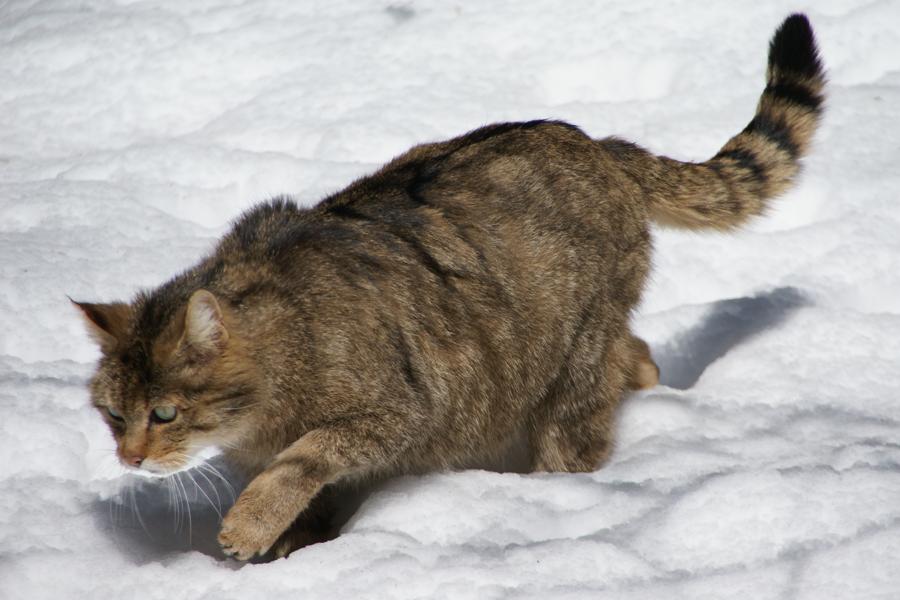
by Santiago Rosero Perea, age 12
The European wildcat is a small feline that looks a lot like a regular house cat, similar to the well-known domestic tabby cat.
The characteristics of these cats are essential to helping them survive. For example, their whiskers and eyes help with their movement and vision at night. Their eyes are structured in a way that allows them to capture as much light as possible in the dark. This means they can see six times better than humans. These cats are known to have strong bones and their upper canines can have a length of two centimeters. Their claws are very helpful when it comes to hunting, self defense and other activities. In fact, they have a “dew” claw that remains hidden in their forefeet.
This stealthy creature measures 20.5 to 29.5 inches for a male and 18.2 to 22.9 for a female. Their diet consists of rabbits, insects, small reptiles, amphibians, and small mammals or birds. The European wildcat can weigh between 6.6 and 17.6 pounds, and can live up to 15 years.
The European wildcat is found in most parts of Europe. There are two subspecies in Western Asia and Africa, known as the Asiatic wildcat and the African wildcat. In total, there are 30 species of genus Felis cats.
The European wildcat is a wonderful animal, their characteristics are unique, and their night vision is extremely helpful. Although these animals are not in danger of extinction, it is still important to learn about them and how they can be protected to allow for their survival in the future.
[Source: Encyclopedia of Animals]











Loading Comments...