Herbivores Teeth Were More Fearsome than we Initially Thought
By Liceth Alarcon Cuevas, age 13
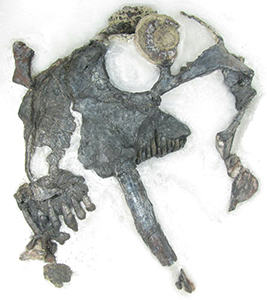
When
you hear the term herbivores, you might think of calm, docile
creatures that eat plants, such as bunnies and deer. But this was
challenged when scientists discovered a new fossil species:
Tiarajudens eccentricus
.
Tiarajudens
eccentricus
is a 260-million-year-old fossil. This new species,
slightly larger than a wild pig, is part of an extinct group called
therapsids. These mammal-like reptiles were the most abundant
four-footed species during the Permian period. Paleontologists found
Tiarajudens eccentricus
in southern Brazil, near the borders of
Uruguay and Argentina.
This
short-snouted species had three very distinctive sets of teeth: top
and bottom teeth that fit together like human teeth, another set
running down the middle of its mouth, and long canines like those of
a saber-toothed cat. The top and bottom teeth allowed it to chew with
ease. This was important because it was an herbivore. Researchers
suspect that its long canines were used by males to fight others of
the same species, or to ward off predators.
The
teeth surprised researchers for many reasons. Not only were top and
bottom teeth that fit together unusual for this time but also unusual
was the way they used their canines. Researchers had thought that
canine teeth first appeared in modern herbivores, and were surprised
to learn that this ancient species got there first.
This
new discovery is making scientists rethink what they believed they
knew about the evolution of herbivores, their teeth and survival
strategies.
[Source:
The New York Times
]
|