Red Flour Beetles Have Unconventional Water-Drinking Abilities
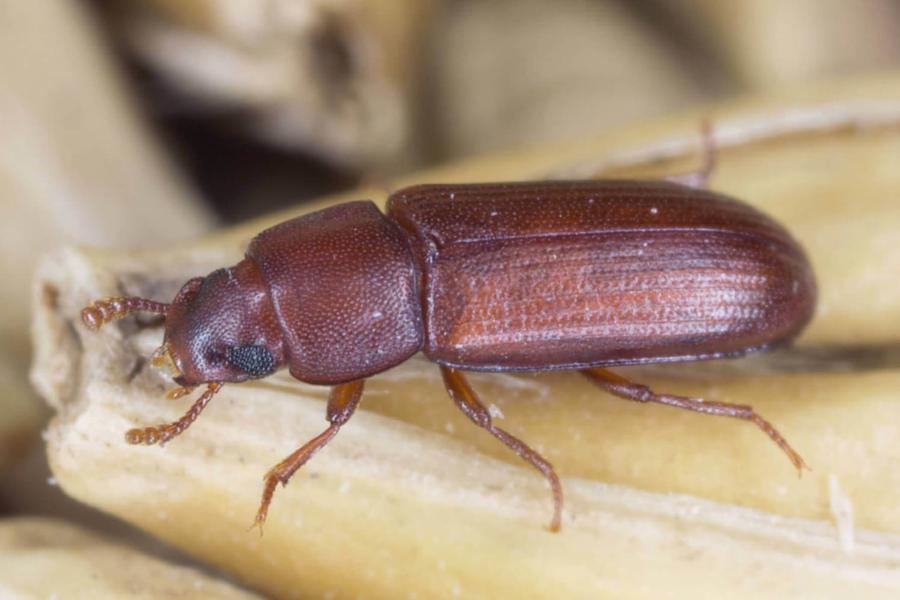
by Dayanara Flores Gonzalez, age 15
Did you know that some beetles can drink water from their butts?
Water vapor from the air condenses on feces inside the red flour beetle's lower gut. This water is then drawn into the beetle’s body by a special cell lining the gut. This mechanism was studied by Kenneth Halberg, who leads his research at the University of Copenhagen, Denmark. Halberg studies how hormones work in different kinds of beetles, and he believes this research could aid in pesticide design.
Red flour beetles have a gene known as Nha1. The gene is more active in cells that are part of the rectal complex of the digestive system. Halberg’s team found that the gene Nha1 in beetles can lead to the accumulation of charged potassium particles. This buildup triggers a process called osmosis where water moves towards an area with a high concentration of ions. This process is especially critical for the beetle as it allows for water to be pulled through the walls of the insect’s rectal complex into the rest of their body for circulation. Researchers figured out that red flour beetles open their anuses in high humidity when there is more water vapor in the air. This draws more water into the rectal complex and eventually into body circulation.
Scientists tried turning off the Nha1 gene to see if the beetles would survive. Beetles that did not have the Nha1 gene had low rates of survival in dry environments compared to normal beetles.
According to the United Nations Food and Agriculture Organization, beetles, including red flour beetles, are very destructive. Insect pests such as beetles can destroy food and have a large financial cost for farmers. Many insects get into as much as one-fifth of the global food supply every year.
With a better understanding of how insects such as beetles obtain water and survive, new compounds can be developed to better mitigate agricultural issues derived from insects.
[Source: Science News Explores]











Loading Comments...