Camels: Remarkable Desert Dwellers of Mongolia and China
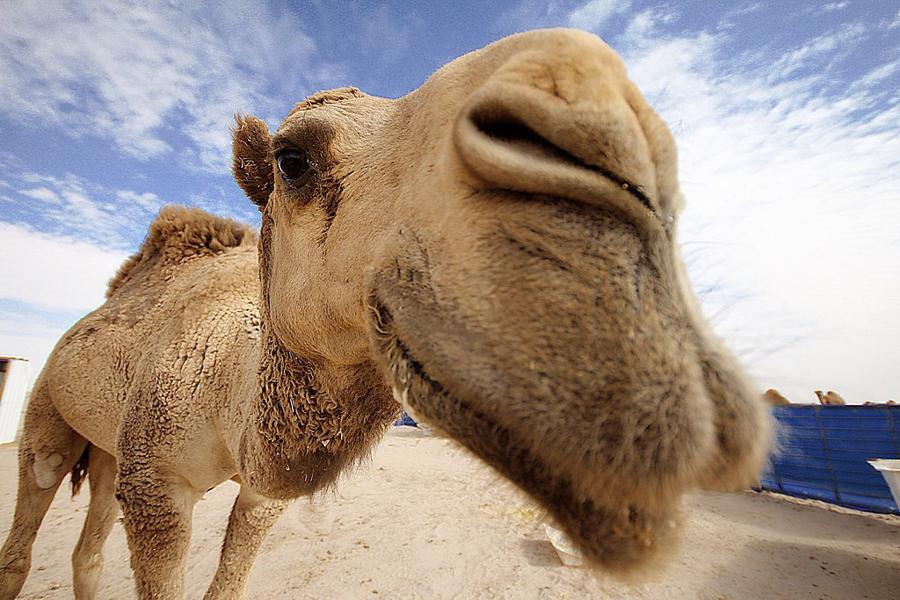
by Juan Esteban Palma, age 11
Camels are desert-dwelling animals found in arid regions like Mongolia and China. Their dietary choices depend on their location, primarily consisting of plants. There are two camel species: the Bactrian camel, with two humps, and the more prevalent dromedary camel, also known as the Arabian camel, which has one hump. These humps provide energy for desert navigation and sustenance. Dromedary camels represent nearly 90% of the camel population.
Around three thousand years ago, camels were domesticated and employed for various purposes, such as transportation. They can endure extended periods without water, which aids their desert survival. They can carry up to 200 pounds and cover over 20 miles daily, while also serving as a source of food and milk for humans.
Bactrian camels can measure between 5.2 to 5.9 feet in height, 10 to 15 feet in length, and weigh from 990 to 1,100 pounds. Dromedary camels range in height from 5.9 to 6.6 feet, length from 7.2 to 11.2 feet, and weigh between 880 and 1,320 pounds.
Camels are herbivores, primarily consuming grass, grains, wheat, and oats. They graze and store fat in their humps to provide energy when food is scarce in the desert. Camels possess long eyelashes to shield their eyes from sand, and they regurgitate food for further chewing to maximize digestion.
Camels are remarkable creatures perfectly adapted to the challenging desert environments of Mongolia, China, and beyond. Their distinct humps and unique features enable them to thrive, serve as valuable assets to humans, and continue to play a vital role in these arid regions.
[Source: PBS]











Loading Comments...