From Toys for the Rich, to Tools of Conservation, Zoos Have a Long and Storied History
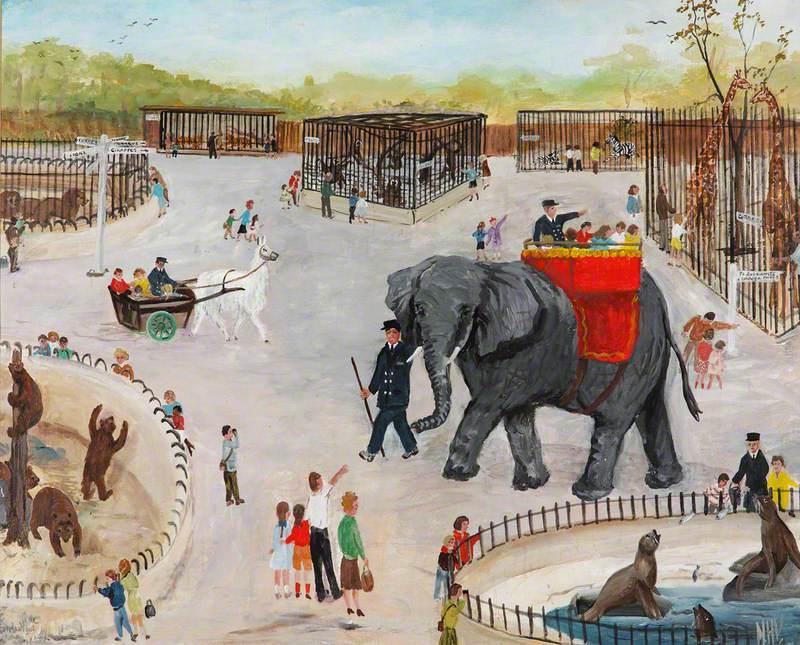
by Nae McNeail, age 13
People have kept animals in zoos for more than a thousand years. Wealthy people created the first zoos, called menageries, which were private collections to display power. Zoos later became a place for the public to learn about animals, and today serve many purposes, including preserving and studying endangered species.
The word ‘zoo’ comes from ‘zoological park,’ and the first modern zoo was built in 1793 in Paris, France. Earlier zoos resembled museums with live animals in their natural habitat. In the 18th century, during the Age of Enlightenment, public zoos grew in popularity. This was a time in European history when scientific knowledge was emphasized by many leaders. This also applied to zoology, the study of animal behavior. Zookeepers had to care for animals in order for scientists to conduct research on their behavior and anatomy. Zoos serve as educational resources that help humans see how animals live.
Not all zoos are the same. For example, Urban zoos are commonly found in larger cities. There is little room for these zoos to expand since they are in the middle of cities. The tight space means that often, animals are kept in small enclosures. Some argue that keeping animals in urban zoos is cruel due to the habitat conditions, noise, and pollution.
Suburban zoos are located outside of city centers, in the suburbs where there is more space. This means they can be much larger than urban zoos. For example, the San Diego Zoo in southern California houses 800 different species within 100 acres. In fact, it is the largest zoo in the United States.
Safari parks, by contrast, are open-range zoos where people can drive their cars to view these animals. It is a great way to let animals have more space; sometimes, visitors are even able to feed them. In Fuji Safari Parks in Susono, Japan, there is the option to drive-through or just look at the animals in a common zoo. Visitors can also look at nocturnal creatures during night tours.
Game reserves have large areas of land with native plant and animal species. They allow animals to roam around, instead of limiting their space or access. If permitted, hunters may be able to hunt the animals in the reserves in a controlled manner.
Petting zoos are safe for children to feed and pet harmless animals, such as goats, donkeys, rabbits and sheep. These types of zoos are more commonly found at parks inside of larger zoos.
There are many controversies regarding whether or not animals should be kept in captivity. Some argue that if they the animals were to be released now, they would not know how to survive on their own. Captive animals often grow accustomed to being taken care of by zookeepers.
For example, it would be difficult for some animals to go back to their habitat as their diet would have to change, and they might not know how to hunt or gather food. Another issue that arises is animal obesity due to lack of exercise. Even though these animals run, jump, and play in zoos, it is not enough room for them to exercise.
Many people believe animals should stay in the wild, though others argue zoos can be a tool to preserve endangered species. Captive breeding programs at zoos can train animals so that they can later be released into the wild.
[Sources: National Geographic; Smithsonian National Zoo and Conservation Biology Institute]











Loading Comments...