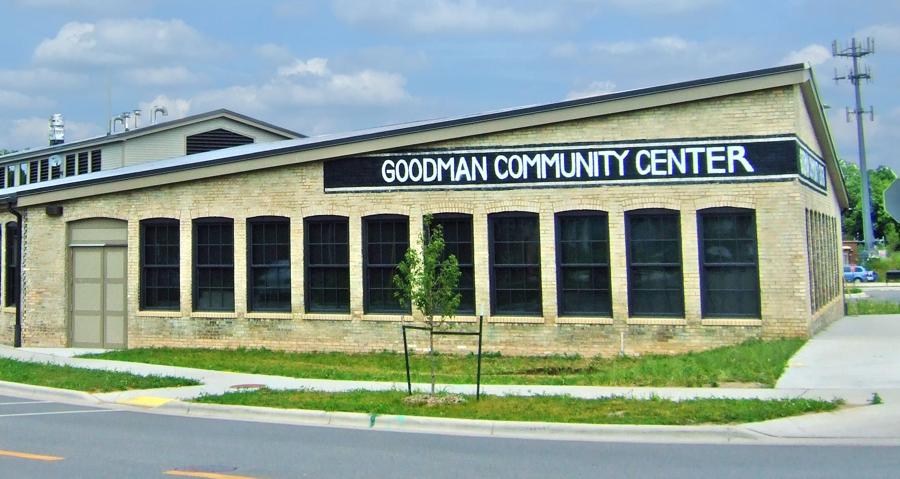
Goodman Community Center Launches Literacy Initiative Backed by Science of Reading Principles
by Owen Ayite-Atayi and Camila Cruz
Goodman Community Center’s *START Literacy Initiative was launched by literacy specialist Iris Patterson this past spring. The program teaches volunteers the necessary skills to teach kids how to read. Volunteers then put their skills into practice by tutoring children.
The initiative is aimed at Wisconsin’s literacy crisis. In our state, 47% of students in grades 3-5 score proficient in reading. Only 24% of Hispanic and 14% of Black students scored proficient, according to 2023-24 Forward Exam data. Wisconsin’s wide achievement gap, though worsened by the pandemic, has been around for decades.
Iris Patterson is a former 4th and 5th grade teacher. She is working to raise awareness about the science of reading in Madison.
A recent community film screening and symposium called “This LIT Just Got Serious” was hosted by the *START Literacy Initiative at Goodman. Patterson said that during her time as a classroom teacher she did not know, and was not taught, how to effectively teach reading. For many teachers, this continues to be the case.
“I knew that if I don't know it, and I'm a 15-year veteran teacher, parents don't know it. Community members don't know it. And we all need to get together and start to know it,” Patterson told Simpson Street reporters after the event.
Patterson is already working to make it happen. A group of volunteers completed the first session of *START Literacy Initiative this past spring. *START stands for science of reading, trainings, activities, residencies, and tutoring, terms that summarize the program’s curriculum.
The mission is to make reading fun, and “to open up a world of possibilities for students, decrease reading anxiety and negative self-talk while fostering connection with adults through the tutoring process.” In this model, volunteer tutors help kids read using evidence-based strategies.
During the spring session, volunteers immersed themselves in science of reading curricula for five weeks. Then they tutored a cohort of students for eight weeks. A second cohort of tutors is in training now.
We interviewed Shan DiPiazza, a *START volunteer and part of the first tutor cohort. She said the work is a collaborative effort between students, tutors, parents, and teachers. The eight-week tutoring session is “bookended by two big thorough assessments and…a couple of smaller regular snapshots in between,” DiPiazza explained.
The program uses a three-component lesson plan. Students start by rereading for fluency. For this component, students read for a set amount of time from the same book each day, according to DiPiazza. The goal is to increase fluency over time.
Next, students do word work, which includes phonics and vocabulary activities. The final component of their day is guided reading, where the tutors help students read a text or model good reading habits. They talk about “what fluent reading sounds and looks like” by reading aloud.
Also a tutor from the first cohort, Susan Podebradsky told us one-on-one time with students is crucial. It helps her focus on “what interests them and where they have weaknesses,” which allows her to “spend the time on the things that they really need instead of wasting time on stuff they already know.”
This individualized instruction isn’t always possible during the school day. “The teacher can't adapt everything for every kid, all day long,” according to Podebradsky.
Patterson believes in this methodology for *START “… because it's actually based in science.” She says after years of teaching reading using ineffective curricula, now is the time to switch to what actually works. Patterson claims there’s no excuse for children to be slipping through the cracks.
“We have now all the science we need to show how our brains work and how we learn to read, so we don’t have to guess anymore,” said Patterson. “We need to get back to the science of phonics and being able to teach our kids how to sound out words.”
Reflecting on the results of the first session, DiPiazza said “it's just incredible what this program can do.” The next residency program will be open for interested community members in 2025 and will focus on elementary-age students who read below grade level. No prior experience with teaching is required.
Moving forward, Patterson hopes that *START Literacy Initiative will help community members “recognize Goodman Community Center as a hub where they can come to get their literacy needs met.” She plans to form partnerships with other organizations and share information with the community. For Patterson, the focus remains on individual students. She hopes the *START Literacy Initiative will spark proficiency and the love of reading.









Loading Comments...