The Trailblazing Life of Amelia Earhart
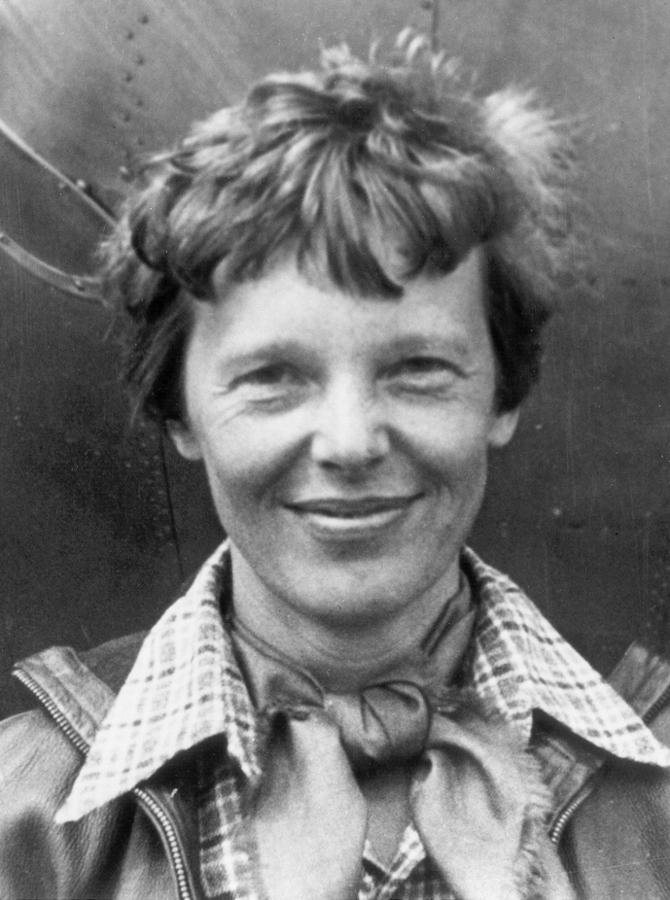
by Carley Baker, age 14
Amelia Earhart accomplished something that men could not achieve. She was a national heroine because she was the first woman to cross the Atlantic Ocean by plane. She even made solo trans-Atlantic and trans-Pacific flights.
Earhart was born on July 24, 1897, in Atchison, Kansas, and she had a hard childhood. Growing up, her family had financial problems. Her dad, Edwin Earhart, had an uncontrollable drinking problem, affecting his ability to keep a job. Due to these circumstances, Amelia and her sister, Muriel, lived with their maternal grandparents for 12 years. At school, she was an intelligent student, and during World War I, she and her sister both worked as nursing assistants. Shortly after the war ended, she trained as a doctor in California, but she dropped out due to being “seduced by aviation”.
Amelia first flew in a plane as a passenger in December of 1920. After this experience she loved and wanted to fly. Earhart insisted on having a female teacher; her teacher’s name was Neta Hook, who gave Amelia her first ever lesson in January of 1921. That same year, Amelia saved enough money to buy her own plane: a bright yellow, two-seater Kinner Airstar, which she named Canary.
Earhart moved to Boston in 1924, where she worked as a social worker; however, flying was what she loved. One day, a rich woman named Amy Guest was looking for a women's trans-Atlantic flight to sponsor and heard about Amelia through her publicist, George P. Putnam. Amelia was asked to join Willmer Stultz and Louis Gorman where they flew from Newfoundland, British Isles to Burryport, Wales on a Forker F7. Amelia flew for 21 hours as a passenger, giving her the top headline worldwide.
Amelia became a public figure, accomplishing many things like crossing the Atlantic alone to get to Paris, but due to weather issues, the plane landed in Ireland. In 1935, she was the first person to cross the Pacific alone, and she also won a Gold Medal for Distinguished Flying Cross. Unfortunately, she died trying to fly around the world when her plane ran out of fuel and fell into the Pacific Ocean.
Her death became a conspiracy theory because of the lack of evidence after a large-scale search involving 4,000 U.S. Navy and Coast Guard members. They found no trace of Amelia’s plane. Explorer, David Jourdan, went searching for clues, but this mystery still persists. Amelia is a well-regarded woman due to her great accomplishments and her never quitting on her dreams and goals.
[Source: Women Who Changed the World]











Loading Comments...