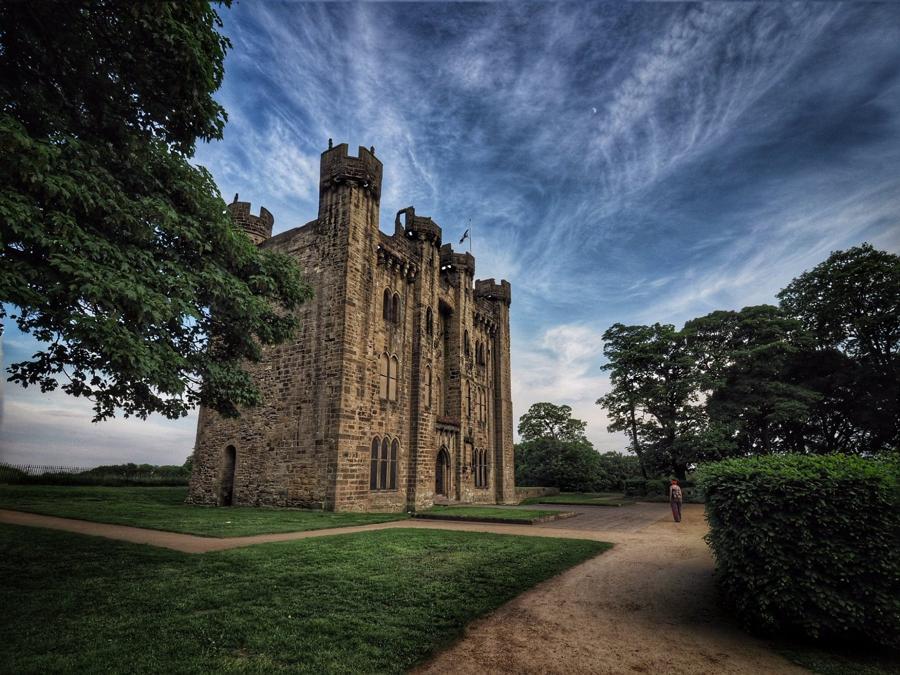
Hylton Castle Reveals Its Hidden Medieval Past
by Riya Adhikari, age 13
The Hylton Castle was a magnificent castle that dates back to the late Middle Ages. It is believed that a wealthy royal family lived there. Today, the castle lies in ruins and its worn-down state offers glimpses into its stored history.
The Hylton Castle was huge. Back when the castle was first built, size implied power and authority. Archaeologists state that the castle had a dining hall, kitchen, tall towers, private rooms, and more. As an addition to the castle, there was a huge courtyard and a gatehouse that could have been a private residence for the lord and his family. Additionally, other parts of the courtyard would likely contain a space for communal feasting and other sources of entertainment.
The Hylton castle was likely constructed by hand, reflecting the craftsmanship of its time. Stone roof tiles were constructed on the main hall, overlapping one another and forming a stable and weather-resistant structure. Floor tiles of the structure were larger and thicker than other tiles used in the English construction of churches, castles, and palaces. These tiles had no distinct patterns and were a single-color glaze.
The lord who built this castle, William Hylton, was probably very wealthy as the castle’s vast size and numerous rooms strongly suggest. This castle in particular has been surveyed several times by archaeologists. Geophysical and earthwork surveys were conducted in this area allowing a better understanding of the interior and the people who lived there.
Among the ruins, archaeologists have found several artifacts including carvings on the wall and pieces of pottery. A jug was found and archaeologists were able to figure out from context clues that it was used to serve wine, ale, and water during feasts and other meals.
The Hylton Castle was an important building in history. The stories that it tells are fundamental to learning and an interesting concept to study. The details in the castle’s design are important in architectural history.
[Source: The Atlas of Archaeology]











Loading Comments...