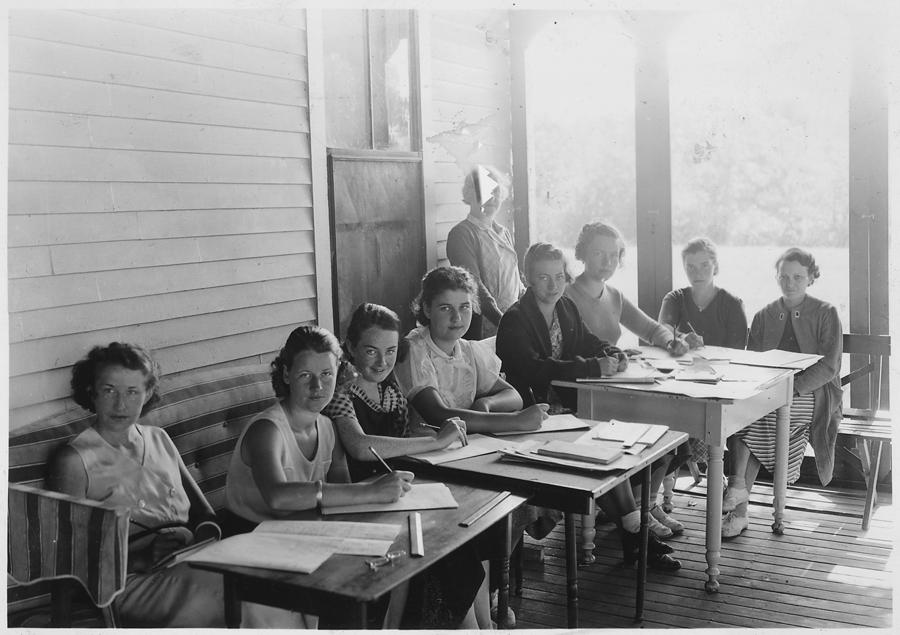
How the She-She-She Camps Gave Hope to Women in the Great Depression
by Camila Cruz, age 16
During the 1930s, thousands of men and women were laid off due to the stock market crash of 1929. The whole country was suffering during the Great Depression, but women were especially overlooked.
Due to the high numbers of unemployed Americans, one of the first priorities of President Franklin Roosevelt after his inauguration in 1933 was to create the Civilian Conservation Corps, or CCC, a program that employed over three million men. The program gave hope and jobs to many, but women were still left jobless and poor since the CCC was only open to men, even though women made up about a quarter of the workforce.
As letters poured in from women asking for help, First Lady Eleanor Roosevelt wondered what she could do. Seeing how the CCC was changing lives, she helped launch a smaller initiative for women called the “She-She-She Camps.” Officially named the “Emergency Conservation Work for Women,” these camps provided unemployed women with shelter, food, and training. Many critics mockingly referred to them as “She-She-She Camps.”
The She-She-She Camps offered a break from the hardships of the Depression. During the Depression, jobless women often shared cramped living spaces, sometimes with seven women in a one-room apartment. Some rode the subway all night because they had nowhere to go, and others survived on just a cracker per meal.
At the She-She-She Camps, women were well-fed, rested, and trained in skills that might help them find work. The camps also focused on personal development; some women learned to sew and cook, while others practiced typing or took part in art projects, plays, and discussions.
“It’s not only that I am getting enough to eat for the first time in three years, but I am beginning to think of myself as a real person again,” one attendee wrote.
Despite the program’s benefits, critics thought women should stay in traditional roles, and some looked down on the idea of women being trained in anything beyond housework. The impact of the She-She-She Camps shows the resilience of women and reminds us that they are capable of much more than just household duties.
[Source: New England Historical Society; History Channel]











Loading Comments...