Bush Vipers Are Camouflaged Predators with a Venomous Bite
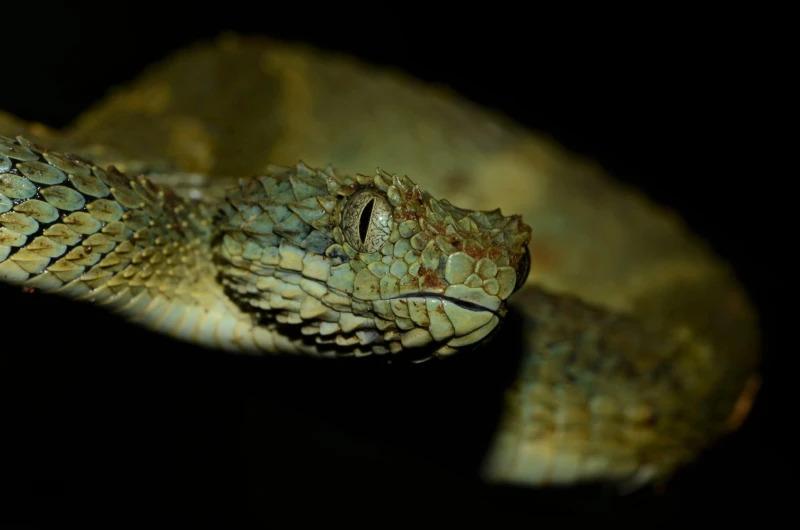
by Gerardo Sanchez Ramirez, age 10
Bush vipers are incredible snakes that have unique physical features and characteristics.
The scales of a bush viper are ridged and help the snake grip to surfaces. Their scales range in many colors from green and brown to yellow and black. These snakes rely on their color and scale patterns to camouflage and avoid detection. Bush vipers have large round eyes with vertical pupils. Their eyes are well adapted to help them find prey in dim lighting. Bush vipers have broad triangular heads; this head shape helps accommodate the space needed for their large salivary glands that produce and store their venom. Similar to other snakes, the bush viper uses its tongue to track its prey. It occasionally flickers its tongue to capture the scent molecules emitted from other creatures.
These snakes have an unknown lifespan however, bush viper females are typically bigger than males and can grow up to 29 inches long. The fangs of bush vipers are their biggest weapons, carrying venom that can knock out prey. They consume a variety of creatures including other snakes, snails, slugs, birds, amphibians, lizards, and rodents. They hunt by lurking in trees and dropping down to catch prey that unexpectedly pass by.
Bush vipers live in Africa typically in isolated populations. They prefer to live in areas far from human settlements and spend most of their time in trees. Bush vipers were once more widely distributed across various areas; however, their numbers have declined due to dwindling forested habitats. Forest species are more at risk as their spaces are being cleared for logging and new construction.
The elusive nature and striking appearance of bush vipers make them fascinating yet dangerous creatures of the African forest. Respect for their habitat and avoidance of unnecessary contact is key to coexisting safely with these vipers.
[Source: Snakes and Reptiles]











Loading Comments...