Gila Monsters: The Venomous Predators of the Desert
by Ermiyas Abiy, age 9
Gila monsters are one of seven venomous lizards that exist in the world. They are some of the rarest creatures but are also endangered.
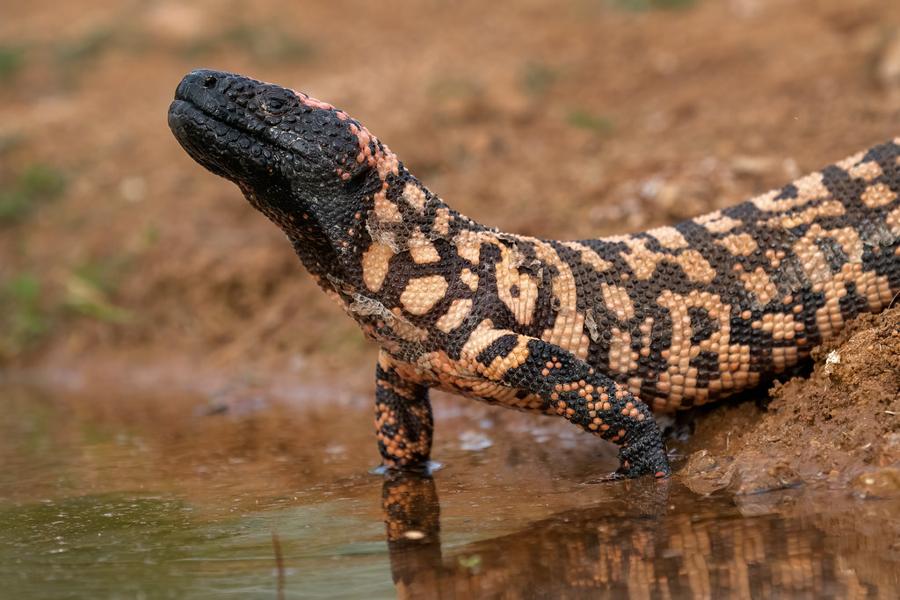
Gila monsters have many interesting features. One of its most notable features is its poisonous bite and venom. Gila monsters have bacteria in their mouths which can cause infections to its prey upon attack. Along with the bacteria, their venom is fatal to most small animals like reptiles, rabbits and rodents. Gila monsters have unique color patterns consisting of black, brownish-yellow and red. These color patterns help them camouflage from predators. Additionally, their bony and bead-like scales act as effective protection and armor.
While the Gila monster has many strong protective features, one of their weaknesses is in their vision. Their eyes are small and inefficient, thus they rely on other senses for practically everything.
Their jaws are probably their most powerful body part. The Gila’s jaw has strong muscles allowing for an effective bite and two fang-like teeth to inject venom into their prey. These creatures' forked tongues work like a snake's forked tongue, allowing the creature to smell air.
Gila monsters mostly live in desert regions in parts of Nevada, New Mexico, Arizona, California, and Utah. They also live in Sonora in northwestern Mexico. Their sharp and durable claws also allow them to live in trees and climb rocks to capture prey.
Gila monsters have a diet consisting of other reptiles, rodents and sometimes other Gila monsters. For example, male Gila monsters fight each other to win over females, but are immune to each other's venom. Thus, these creatures can sometime end up consuming one another.
Gila monsters are remarkable reptiles. Despite their fearsome reputation, Gila monsters play a critical role in the animal kingdom as predators and are ultimately fascinating creatures that help create balance in ecosystems.
[Source: Snakes and Reptiles]











Loading Comments...