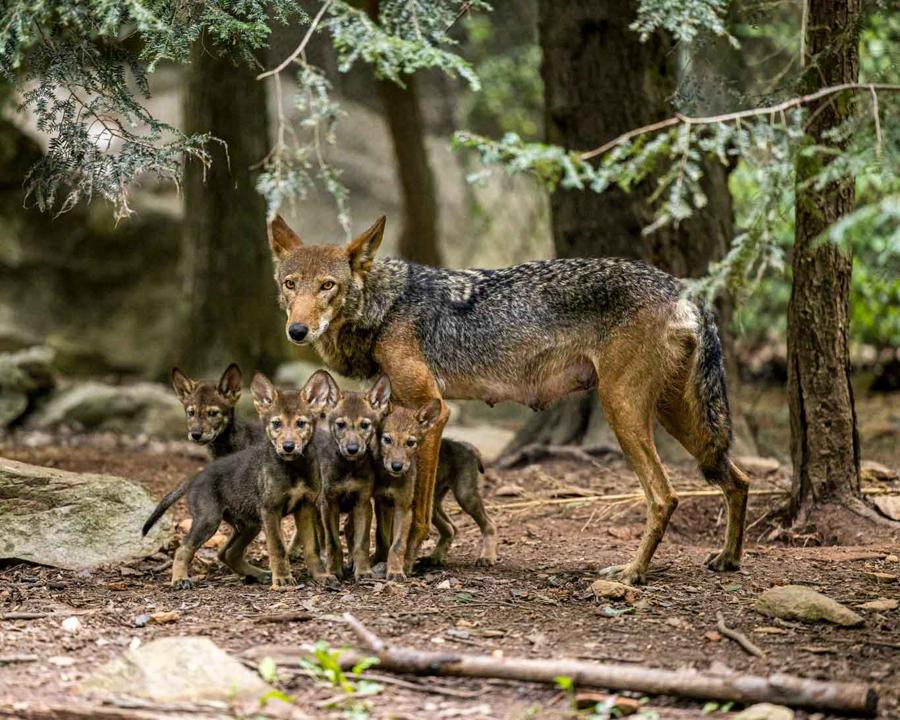
St. Louis Zoo Welcomes Red Wolf Cubs, Bolstering Endangered Population
by Sofia Zapata, age 15
Red wolves have been listed as an endangered species since 1967. This species is considered the only large carnivore that is exclusively native to the U.S. It is estimated that fewer than 300 red wolves exist in captivity, with fewer than 25 remaining in the wild. In the past year, four healthy red wolf pups were born at the St. Louis Zoo.
There have been no wild sightings of red wolves in Missouri for more than 70 years. Red wolves are the world's most endangered wolf species, as their population has been drastically reduced by predator control programs and habitat degradation. In 1980, the species was declared extinct in the wild.
Red wolves are highly adaptable and can live in a variety of habitats, as long as there is sufficient food, water, and cover. They typically prey on small mammals, white-tailed deer, and raccoons. Red wolves are capable of traveling up to 20 miles a day in search of food. They have broad heads and tall, pointed ears. They stand about 26 inches tall, are approximately four feet long, and weigh between 45 and 80 pounds. Red wolves are generally wary of humans and tend to avoid human interaction. They live in close-knit packs of five to eight wolves.
The U.S. Fish and Wildlife Service is working to revitalize the red wolf population over the next 50 years, with the goal of removing the species from the endangered species list. This effort is projected to cost $328 million. The cubs will remain under the care of the wildlife reserve, which is currently not open to the public. The reserve plans to allow the cubs to stay with their parents for a few years to learn essential survival skills, away from human interference.
Once the red wolves reach maturity, they may be relocated to facilities focused on bolstering the population of this endangered species. Births like these offer hope for the future of red wolves and contribute to ongoing efforts to remove them from the endangered species list.
[Sources: St. Louis Post-Dispatch; U.S. Fish and Wildlife Service]











Loading Comments...