Sand Cats Thrive in Deserts as Tiny yet Fierce Hunters
by Chelsea Zheng, age 12
Despite being smaller than a common house cat, the sand cat is a fearsome predator. Unlike most other cats, this cat lives in the harsh desert and has accumulated various adaptations to survive in these areas.
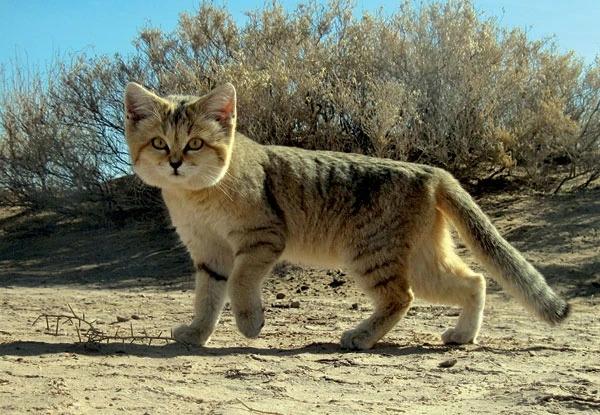
The sand cat's large ears help it detect prey. This feature is necessary because these cats are nocturnal. Their ears are low on their head so they can stay hidden in the barren landscape. Their sandy-gray fur helps them blend in with their surroundings, which leaves them unnoticed by predators and prey. The sand cat’s fur also protects its paws from the hot sand.
Sand cats are the only cat species that primarily live in the desert. With their powerful limbs, they can dig burrows to escape the sun’s heat. These cats weigh 6.6 to 8.8 pounds, while an average house cat weighs between eight and 12 pounds. Sand cats mature in 14 months and can live up to an average lifespan of eight years.
Compared to the African lion, the sand cat is 50 times smaller. Although the sand cat is tiny relative to the lion, they share similar physical features and characteristics. Both are excellent hunters because of their sharp claws and teeth, as well as their agility. Sand cats live in deserts in Northern Africa, the Middle East, and Central Asia.
This seemingly cute cat is a fearsome hunter whose bodily adaptations have allowed it to thrive in the desert for an extended period. In understanding and preserving the sand cat, we gain insight into the complexities of desert ecosystems and the resilience of life in these extreme conditions.
[Source: The Encyclopedia of Animals, PetMD]











Loading Comments...