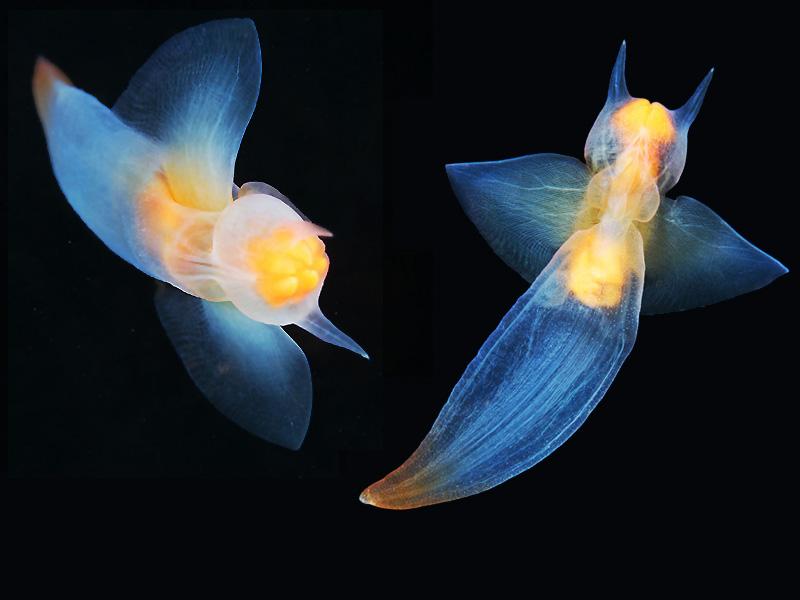
Sea Angels Are Tiny Marine Slugs with Big Survival Skills
by Siheon Park, age 11
Sea angels are semi-transparent marine slugs that swim near ocean surfaces and get their name from the way they glide with their wing-like appendages.
These animals and their prey have been around since the Cretaceous period, about 130 million years ago. Sea angels can grow up to seven centimeters in length and they have a lifespan of up to two years.
Sea angels are hermaphrodites, meaning they can switch genders. During their mating ritual, sea angel couples stay locked together and spin for hours, which turns their reproductive organs inside out.
Sea angels are carnivorous and eat sea butterflies, which have thin shells. Like their prey, sea angels also have shells when they are young, but they lose them once they reach adulthood.
When a sea angel catches its meal, it opens its mouth and uses buccal cones to eat. Buccal cones are a specialized tool unique to sea angels. They look like tentacles but also have hooks and small teeth that remove sea butterflies from their shells to be eaten.
Sea angels are very difficult to kill. Some species of these slugs produce a chemical defense, like poison, to prevent fish from eating them. Although other animals rarely kill sea angels, acidification of the oceans has killed many sea butterflies and other prey, making it more difficult for sea angels to find food.
We can help sea angels and other animals by taking action to reduce carbon emissions that result in ocean acidification. Taking action early to preserve the environments these creatures live in will ensure their survival for future generations to come.
[Source: Ocean Conservancy]











Loading Comments...