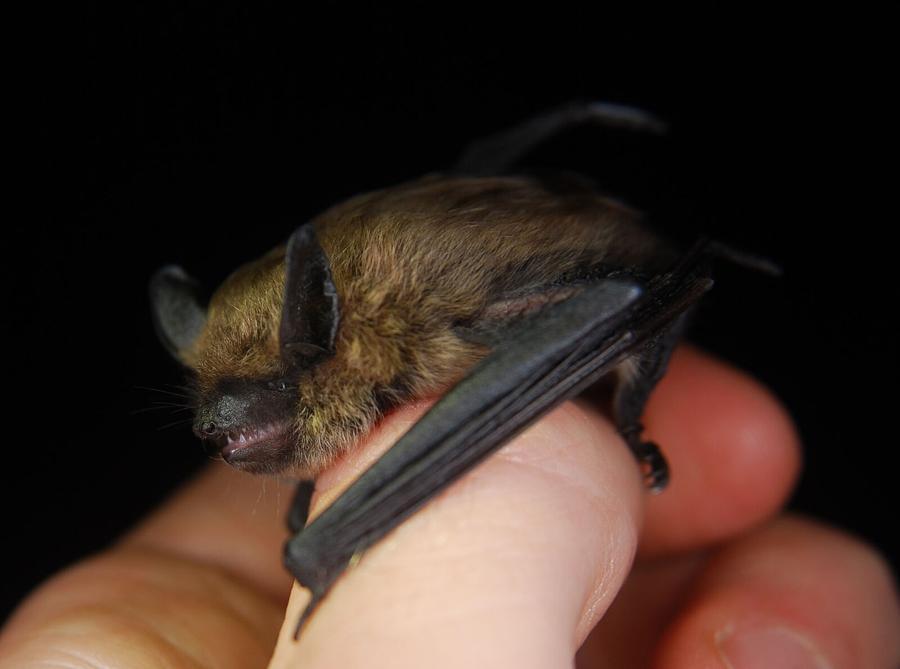
The Eastern Pipistrelle, Wisconsin’s Smallest Bat Species, Was Recently Added to the Endangered Species List
by Ermiyas Abiy, age 9
The smallest bat in Wisconsin is the eastern pipistrelle. These creatures are so small that they can sometimes be mistaken for moths.
Eastern pipistrelle bats are commonly found in the eastern United States. Their range extends from Central America, including northern Honduras, all the way to parts of Canada. Some live in narrow caves, called crevices, while some live in buildings and trees. They do not usually live in the deep forests or open woods.
The eastern pipistrelle flies above water and open woods while hunting. They do this because most of their prey are near water. When the bat has hunted enough in the fall, it hibernates in crevices, caves, and mines in the winter. Eastern pipistrelle mate between August and October. During this time, male and female bats swarm in front of cave openings – it is one of the few times when both genders of the species unite.
These creatures have a life span of four to eight years. Females usually give birth to twins in May or June. These bats are born blind, hairless, and dependent on their mothers, but somehow weigh 52% of their mother's weight! When eastern pipistrelles are born, for the dad, it is a very convivial time. Little work is placed on the father to help raise the child. The mom however takes care of the young, slowly weaning the babies until they are four weeks old and can forage on their own or with guidance.
In just three weeks, young eastern pipistrelle can fly and by five weeks old they are completely independent from their mom. This shows that at a young age, eastern pipistrelles are fully grown and self-sufficient.
The eastern pipistrelle was recently added to the endangered species list. Many bats in Wisconsin and around the US have died because of a fungal infection called 'white-nose syndrome.' Scientists continue to study this strange disease, in the hope of finding a cure. Humans should avoid entering caves where eastern pipistrelles live, because some scientists think humans might spread the disease from cave to cave.
[Sources: Wisconsin DNR; University of Michigan]











Loading Comments...