How Protests Led to the Bombing of UW's Sterling Hall
by Siheon Park, age 11
During the 1960s, many University of Wisconsin-Madison students were protesting the Vietnam War. Police broke up a student protest by using mace and clubs. The protest was about the Dow Chemical Company that produced a deadly chemical called Napalm for the U.S. military, but later on, it would lead to one of the most mysterious cases of domestic terrorism in Wisconsin history.
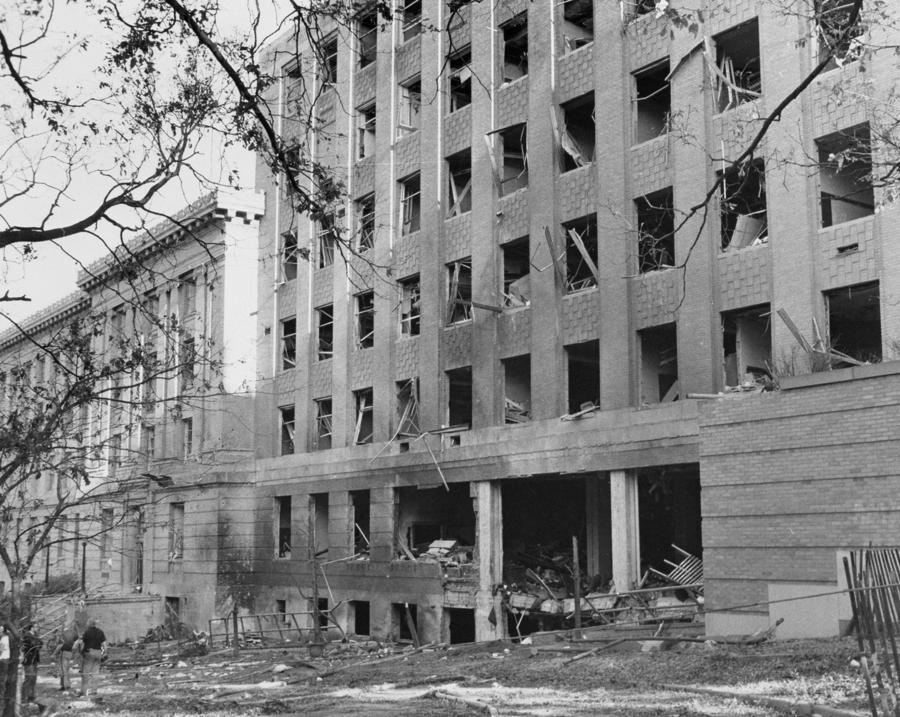
On Aug, 24, 1970, a group of men bombed Sterling Hall of UW-Madison, which was home to the Army Math Research Center, killing physicist Robert Fassnacht, and injuring four other researchers. The bombers were Karl and Dwight Armstrong, Leo Burt, and David Fine. The called themselves “The New Years Gang”.
The bombing of Sterling Hall wasn’t their only attack. Earlier in the year on January 1st, 1970, Karl and Dwight Armstrong attempted to bomb the Badger Army Ammunition Plant in Baraboo, but the bomb failed to go off. Later on, they were involved in bombing the ROTC offices and US draft board in the spring.
The gang had believed that the university research at Sterling Hall was somehow connected to the war efforts that resulted in deaths of many innocent people. After the bombing, the Vietnam War protests significantly receded.
The group was horrified to hear they had killed a person and fled to Canada. In 1972, Karl Armstrong was captured and served seven years in prison. Four years later, David Fine received jail time for three years, and Dwight received four years in prison but strangely, Leo Burt was never found.
Sterling Hall was the New Year's Gang’s last attack and remains as a stark reminder of the social and political climate of the United States during the Vietnam War.
[Source: Wisconsin History Highlights]











Loading Comments...