The Life and Career of Harry Whitehorse
by Kaleab Afeworki, age 12
Harry Whitehorse was a famous artist born in Black River Falls, Wisconsin in 1927. He was born in a wigwam which is the Ho-Chunk’s traditional housing.
When Harry was young, he was a student at Tomah Indian Boarding School where teachers discovered his talent in oil painting and drawing. His skills and appreciation for art blossomed as he progressed in life.
When he served in the military for WWII, his love for art grew especially after visiting the great museums of the Orient and Europe. Artwork in these locations inspired Whitehorse to pursue a career as an artist. After the war, Whitehorse graduated from the Arthur Colt School of Fine Arts at UW-Madison where he studied oil painting. He also studied welding and metal fabrication from a local technical college.
Harry started working on metal in the 1960’s and 70’s. He also owned an auto-body shop for 40 years called Chief Auto Body in Monona, WI. He had always loved and started applying his artistic skills to build a new automobile for the world to enjoy. Unfortunately, Whitehorse eventually stopped working with metal due to exhaustion from the demanding labor.
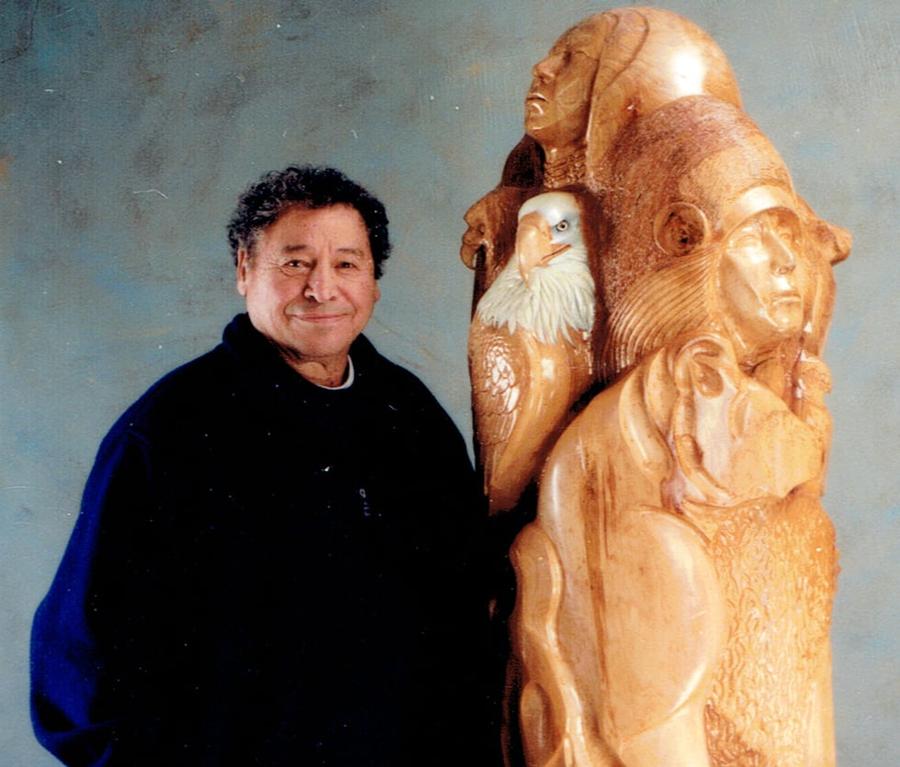
In the 1980’s, Whitehorse began to carve wood into animals. He gained inspiration from his work with his uncle, George Seymour, who was also an accomplished artist and wood carver. Whitehorse loved to carve birds and wildlife sculptures. Some of his wood carvings displaying cardinals, hummingbirds and other creatures were featured in art exhibits across the country.
By the 1990’s, he began to do sculptures on a larger scale. His sculptures were massive but light. This is when he crafted his most famous project titled “Ghost Warrior” which was a life-sized horse made with a combination of his metal and wood carving methods.
Harry Whitehorse died in 2017, after a long and successful career. His wife, Deb Whitehorse said, “Everybody had signs to keep off but Harry had signs to please touch because he wanted people to experience these big sculptures. He was very, very generous with the gifts he has been given.”
[Sources: Harry Whitehorse; Wisconsin State Journal]











Loading Comments...