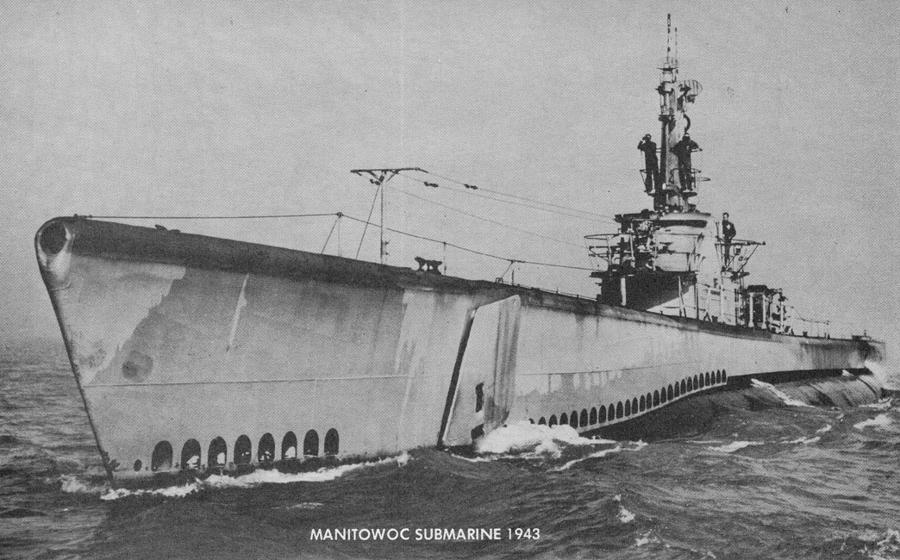
Manitowoc's Submarines: Wisconsin's Key Contribution to Victory in WWII
by Max Moreno, age 11
A shipbuilding company in Wisconsin helped the U.S. defeat Japan in World War II. Charles C. West, the President of Manitowoc Shipbuilding Co., initially wanted to build destroyer ships under a Navy contract.
However, during the Great Depression, the Navy made their contracts unavailable due to the lack of funds. With the start of WWII, contracts became available again. West presented his idea of building destroyers to the Navy but was redirected by a Navy representative to build submarines instead. Despite their initial inexperience, West's 500 employees adapted to the challenge of building submarines. The shallow Manitowoc River made launching submarines difficult, but the company innovated a side-launch technique to fit the submarines in the narrow river.
On Sept. 9, 1940, Manitowoc Shipbuilding Co. received a contract from the Navy to build ten submarines, which was later expanded to 28 due to their efficiency. When it was time for their first submarine launch on April 30, 1942, they successfully used the side-launch technique. Over time, Manitowoc workers mastered new construction techniques, and the company became renowned for their craftsmanship. At the peak of production, the workforce grew to over 7,000 people. By the end of the war, 28 submarines were built, although the initial contract was for ten. These submarines were transported via the Mississippi River to the ocean.
The Allied naval forces were able to effectively disrupt Japan’s merchant fleet, which was crucial as Japan relied heavily on it for supplies. The total U.S. submarine force sank 1,392 enemy ships, accounting for 55% of Japan’s maritime losses.
Overall, 25 of the 28 Manitowoc submarines saw combat and were credited with sinking 125 ships. Manitowoc's submarines played a significant role in the U.S.’s success in the Pacific Theater.
[Source: Wisconsin History Highlights]











Loading Comments...