Archeologists Make Historic Discoveries in Lake Mendota
by Dani Garduño, age 13
Lake Mendota is known for mysterious secrets and historic discoveries, and archaeologists now say that one of its oldest secrets may have just been revealed. Recently, researchers have identified nine more dugout canoes on the lake's bottom, including one estimated to be around 4,500 years old, making it the oldest known dugout canoe found in the Great Lakes region.
Archaeologists from the Wisconsin Historical Society discovered these nine additional canoes near Shorewood Hills with the help of radiocarbon dating and wood analysis. One canoe fragment, estimated to be 4,500 years old, dates back to around 2500 B.C., a time when hunters and gatherers lived in seasonal communities. This makes it the oldest dugout canoe found in the Great Lakes region.
While this ancient canoe is an important discovery, it is only one of many canoes that have been found in Lake Mendota. The canoes were categorized by archaeologists based on the types of wood used to construct them. The materials included elm, ash, cottonwood, white oak, and red oak—woods commonly used by the ancestors of the Ho-Chunk Nation and other Native peoples. The Wisconsin Historical Society continues to collaborate with the Ho-Chunk Nation to learn more about these historic watercraft and the people who built them.
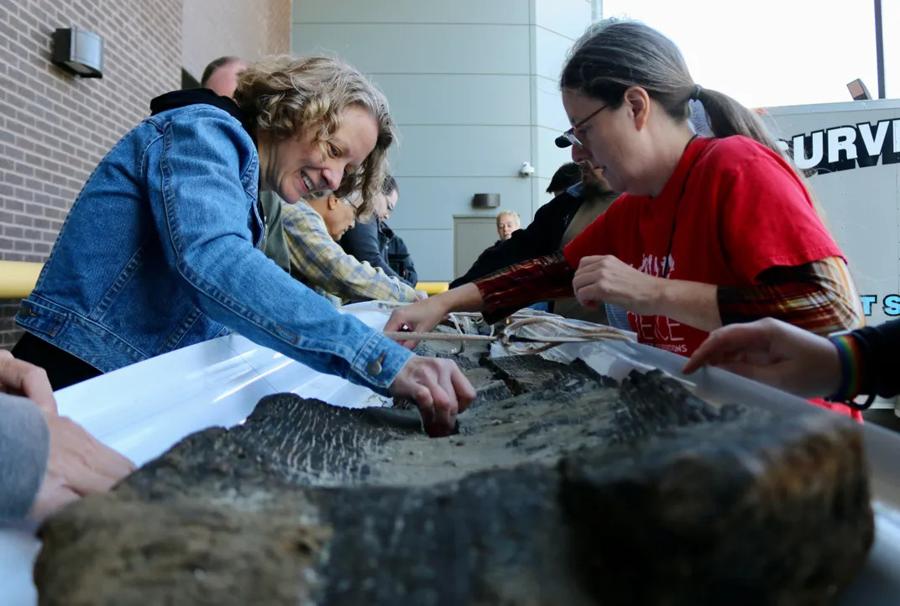
Initially, archaeologists did not know which canoe fragments belonged to which canoe or if the pieces were parts of previously discovered vessels. The fragments found in Lake Mendota were brought to the surface and sent to the State Archive Preservation Facility on Madison's Near East Side. There, they were photographed, scanned, and placed in purified water for preservation, similar to previous findings. This painstaking process helped determine the origin of each fragment and the total number of canoes discovered.
The canoes, which range in age from about 800 to 4,500 years old, provide evidence that the shores of Lake Mendota, now submerged under 20 feet of water, were once home to Native communities for millennia. Some of the canoes may have been intentionally submerged to prevent damage from freezing during winter months, and over time, they were buried by natural forces.
The public remains fascinated by each new discovery from Lake Mendota, as these relics offer a unique window into the past and the ingenuity of the Native peoples who thrived in the area long ago. As archaeologists continue their research, there may be even more secrets waiting to be uncovered beneath Lake Mendota's waters.
[Sources: Wisconsin State Journal; UW-Madison]











Loading Comments...