Who Built the Effigy Mounds in Dane County?
by Ayelen Flores, age 14
Humans have inhabited the Madison area for approximately 12,000 years, with Native American tribes once calling the region home. The Native Americans left behind traces of daily activities in the form of earthen mounds, as well as artifacts from campsites, villages, and cemeteries.
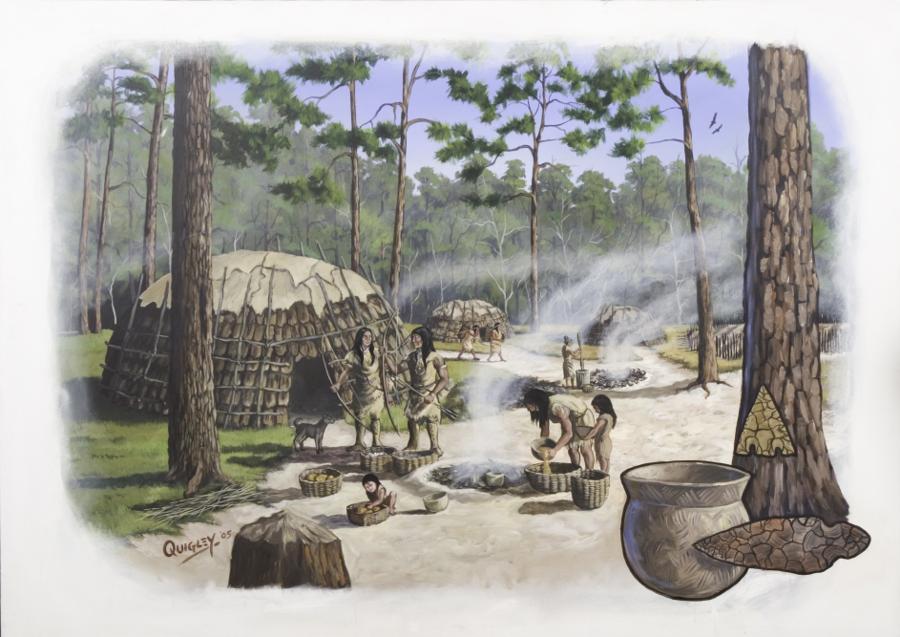
In particular, Woodland groups lived in small villages, where their homes were oval-shaped and partially underground. The size of the house did not matter since most of the tribe's activities were held outdoors.
Earthen mounds, which were popular during that time, were created in a two-thousand-year period. The purpose of these mounds was for the burial of the dead and other ceremonies. Between 650 A.D. and 1200 A.D., also known as the Late Woodland stage, mound building reached Wisconsin. The best-known prehistoric mounds in the country are the effigy mounds, which are located all over Wisconsin. The mounds were built during late prehistoric times.
The effigy mounds are ceremonial flat-top, or “pyramidal,” mounds. The effigy mounds, alongside other mounds, are often located in public parks and state forests. In Wisconsin, prehistoric Native American mounds are protected and mounds are regularly being discovered across Wisconsin. The mound groups were located in zones of abundant and annually recurring food sources. The mounds were artfully sculpted and complex on the natural landscape.
The effigy mounds are amusing to look at, especially from the sky. For example, Mendota State Hospital has a wing span from a bird effigy. Mounds are a useful way to reflect on the past. They continue to hold significance to the Native American tribes who constructed them.
[Sources: Native American Mounds in Madison and Dane County; Wisconsin DNR; Wisconsin Historical Society]











Loading Comments...