Mallard Ducks: Beloved Residents of Wisconsin’s Waterways
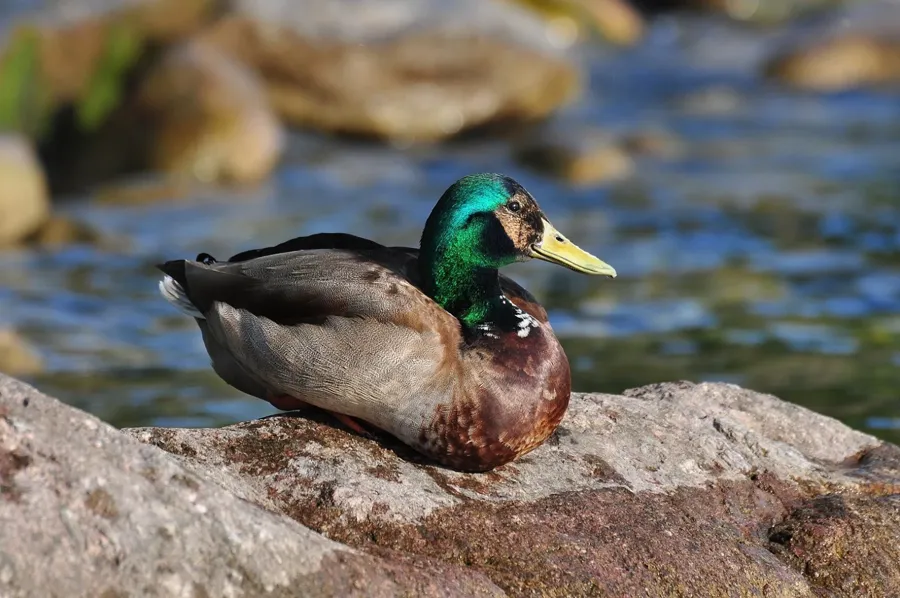
by Joseph Zheng, age 10
In Wisconsin, mallard ducks are very common, especially near water. They are so common that the “Madison Mallards” is the name of a Wisconsin baseball team.
Mallards might plant nests in your roof, flowerpot, or chimney. Be cautious and prepared whenever they come and make a home out of your belongings.
Mallard ducks have big, round heads and flat, wide bills. This duck has a wingspan of about 32 to 37 inches and weighs about one to four pounds. Mallards support their diet with dragonflies, larvae, and gastropods, but the most common food source that mallard ducks eat all year long is grain from crops. Occasionally, they might eat small fish, but their diet mainly comprises plants and small invertebrates. Mallard ducks are nicknamed “Dabbling Ducks” because they tip forward in the water to reach aquatic plants and insects, rather than diving deeply.
Today, there are fewer grasslands, prairies, and aquatic areas than ever in recent history. Organizations are working to restore the habitats of mallards and other animals. While it might seem fun or supportive to feed mallards or wild birds, this can harm these animals. Wild birds cannot rely on processed or non-natural foods, which can make them sick or lead to diseases. Additionally, feeding these birds may lead to their dependency on humans for food, further complicating their diets and survival in the wild.
Mallards can be hunted during hunting season only if individuals have a hunting license and special stamps. Hunting season is used to keep mallards and other large populations under control.
Mallard ducks are a vital part of Wisconsin’s lakes, rivers, and ponds, contributing to the balance of local ecosystems. Their ability to thrive in various water bodies, from small ponds to large lakes, makes them an essential presence in the state. As adaptable as they are, mallards play a unique role in controlling insect populations and helping to maintain plant diversity, making them a valuable component of Wisconsin’s natural landscape.
So next time you spot a mallard, take a moment to appreciate their role in maintaining the health and beauty of Wisconsin's waterways.
[Source: Fox-Wolf Watershed Alliance]











Loading Comments...