Stewart Lake County Park is a Hidden Gem in Dane County's Driftless Area
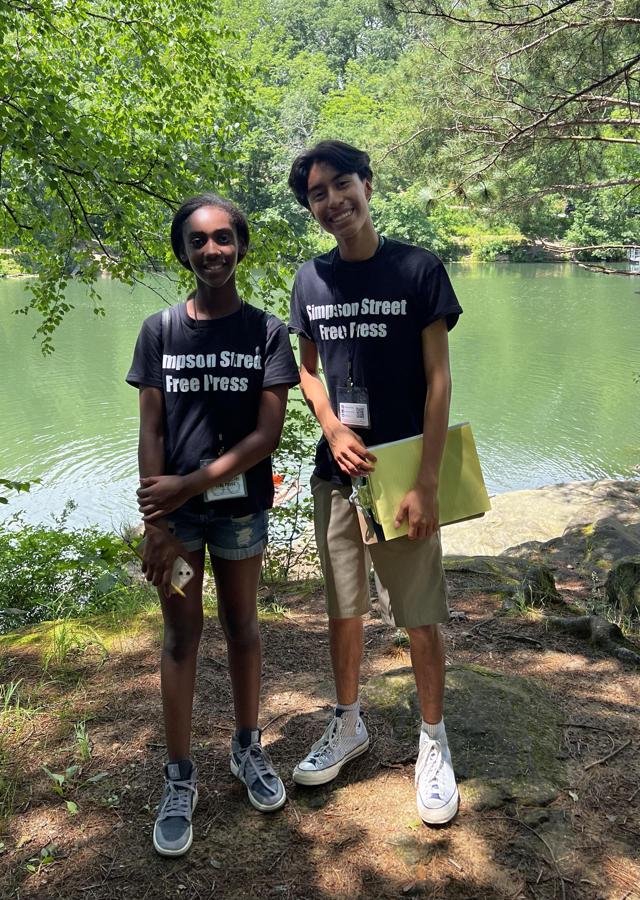
by Samuel Garduño Martínez, age 17
Just west of Madison near the village of Mt. Horeb lies one of Dane County’s hidden gems—its first official park. Nestled in the Driftless Area, Stewart Lake County Park’s bluffs and valleys are a unique piece of Wisconsin. First and foremost, the topography is breathtakingly special. Unlike other regions in the Midwest, the Driftless Area escaped the flattening effects of thousand-year-old-glaciers.
This summer, students from Simpson Street Free Press embarked on several field trips to the Driftless Area. Our plans are to visit this still-preserved treasure and study its characteristics. On one recent trip, we learned that despite going through much change, Stewart Lake County Park is beloved by the people who use it and know it.
Stewart Lake County Park, formerly known as Lake Park, has been around since the early 20th century, but the site has beautifully carved over thousands of years. The park itself has undergone several drastic transformations since it was designated a park in 1912.
At that time, the Lake Park Association had big plans for a small swimming hole formed by the damming of Moen Creek. The association quickly raised $10,000 to purchase 50 acres and set up a park. Part of this setup was the construction of a concrete dam to create a 13-acre swimming area. In its early years, the park hosted many events including 4th of July celebrations, water carnivals, boat races, swimming contests, log-rolling competitions, and a ski jump competition in the wintertime.
The park’s popularity dwindled in 1915 when a 14-hour rainstorm washed away the dam. In 1918, it was purchased by a local doctor and largely unused until 1934. As a part of New Deal program, the Civilian Conservation Corps (CCC) set up a camp on the land, sparking interest in repairing the dam and rebuilding the park. Over the next several years, the CCC restored the land, making the park “one of the state’s most beautiful spots,” as stated by the National Park Service. In 1935, Dane County purchased the land, inaugurating it as the first Dane County Park.
During our visit, it was easy to see why this site was chosen for a park. It has natural look to its landscape with high bluffs and hidden trails surrounding the small lake.
In 1941, the park officially changed its name to Stewart Park, after Dane County Board Chairman Frank Stewart who was a key proponent of the county’s purchase of the park and was recognized by the Mt. Horeb Area Historical Society as a “persistent supporter of western Dane County and public parks.”
The people of Mt. Horeb also endorsed the name change, recognizing Stewart’s 13 years of service to the county during the rocky times of the Great Depression and World War II.
Once the park was restored, it opened to the public. Its lake and beach remain a local favorite to this day, especially to sweaty kids on a hot and humid summer day. Visitors can swim, paddleboard, canoe, and fish.
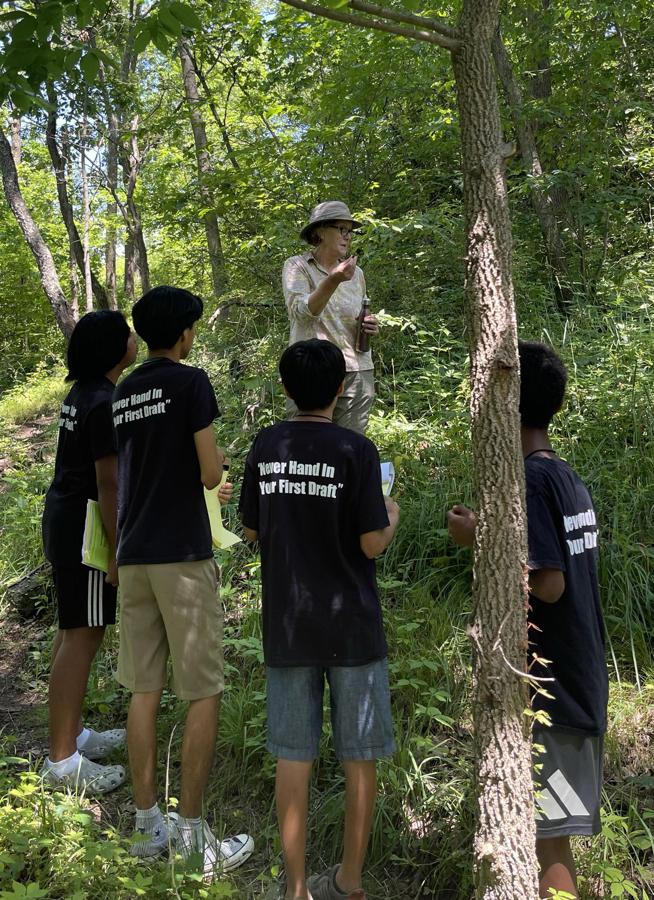
We were interested in finding out more about the unique plants and pollinator species that live in the park. Mary McDonough Sutter, one of the park’s volunteers, offered Simpson Street a personal tour of the many hiking trails.
Ms. McDonough Sutter is part of a large volunteer effort working under the Dane County’s Natural Areas Program to preserve and improve Dane County parks. Together they remove invasive species, plant native seeds, and “steward the land back to health,” according to their volunteer handbook.
During Simpson Street’s exclusive tour, student reporters got to see the process behind this kind of local conservation. McDonough Sutter’s work includes removing allelopathic plants, which release toxins that hinder the growth and germination of neighboring plants such as walnut trees and Dame’s Rocket. This can negatively alter the surrounding soil chemistry. The volunteers also replace invasive species with native plants, which has unexpectedly allowed for the growth of many other rare native plants. In fact, a variety of rare plant species can be seen at Stewart Lake County Park.
We walked the trails with McDonough Sutter as our guide. The varied landscapes of this park are a site to behold. There are prairies and oak savannahs and rock outcroppings overlooking the lake. There’s also a sandy swimming beach with a large shelter area and picnic tables. This park is a place where local conservation efforts thrive, but it’s also a perfect place for a family outing.
After a long hike and a busy day, the Simpson Street crew stopped for lunch at Aztlan Mexican Grill, a family-owned restaurant in Mt. Horeb. Here, we discussed everything we had seen at the Park. Later, we cooled off with some ice cream at the Driftless Historium, also in Mt. Horeb.
We strongly recommend a visit to this pretty and fascinating part of Wisconsin.
[Sources: Mount Horeb Area Historical Society; Natural Areas Program Volunteer Handbook; Stewart Lake County Park Audio Tour]











Loading Comments...