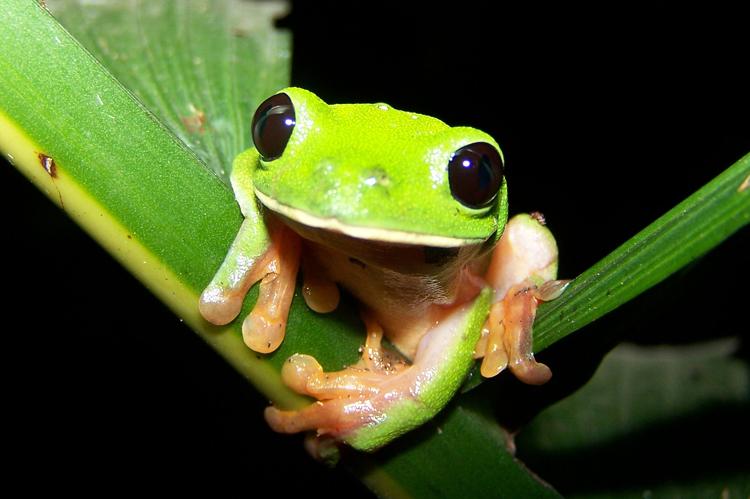
The Adorable Black-Eyed Tree Frog Lives in South America
by Alarice McPark, age 13
With its black, beady eyes and diminutive size, the black-eyed tree frog has its merits of cuteness. Unfortunately, they are ambiguous and endangered due to several reasons.
The black-eyed tree frog, also known as the Morelet’s tree frog, inhabits Central and South America and occupies its humid forests. Black-eyed tree frogs are nocturnal, meaning they are active during nighttime. Their prey includes various insects like flies, ants, and crickets. Black-eyed tree frogs also consume other small invertebrates. But during their tadpole stage, they are herbivores and dine on small, aquatic plants.
Black-eyed tree frogs have long legs, toe pads, and a small body. They have a vivid green color, a light-colored underbelly, orange webbed feet, and their distinctive black eyes give them their name. Male black-eyed tree frogs grow up to 2.3 inches and females grow up to 2.6 inches. As tadpoles, black-eyed tree frogs have a black color, sturdy body, and a tail that helps with swimming.
During mating season, which is during the summer, male black-eyed tree frogs climb up to elevated areas and emit their signature croak to attract females. After they mate, females can lay up to 70 eggs; males fertilize the eggs after they are laid. The eggs have a greenish tint to it and are gel-like. Tadpoles emerge after about five to ten days. They go through the classic frog metamorphosis stages: tadpole, froglet, and finally their adult form.
Black-eyed tree frogs are critically endangered. Reasons behind this are habitat loss, water pollution, diseases, and the pet trade. Their small population is also scattered in their habitats, which makes them so obscure and helpless.
People should be more informed of these frogs as they are important to its ecosystem’s balance. They are significant to their food web and control insect populations. Black-eyed tree frogs are small, but mighty, helpful creatures!
[Source: AmphibiaWeb.org; BioDB; World Land Trust]











Loading Comments...