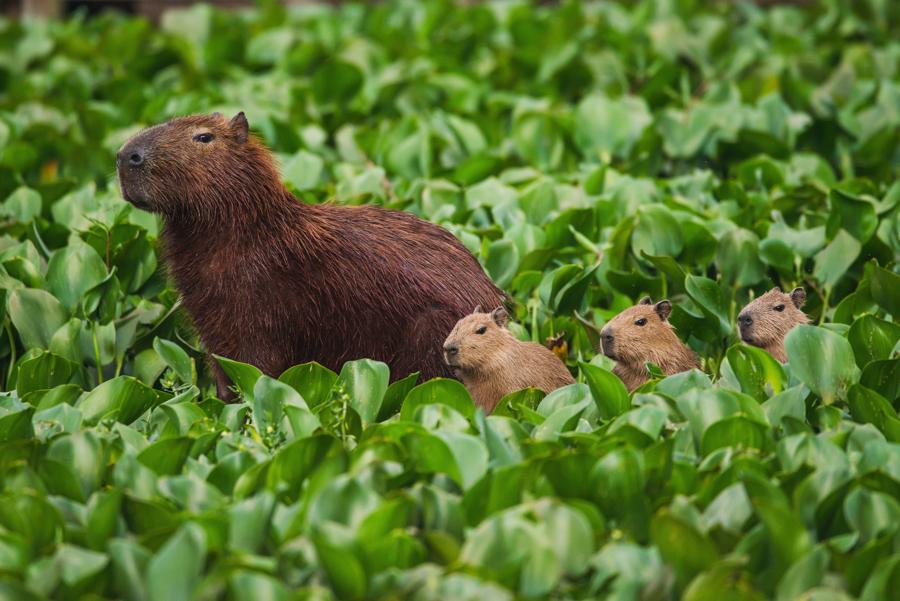
Capybaras: The World's Largest Rodent
by Celestia McPark, age 7
Capybaras are similar to beavers but bigger; they are mammals and herbivores. They are peculiar, fascinating creatures, and their scientific name is Hydrochoerus Hydrochaeris.
A capybara's diet consists of different plants. However, azalea, chinaberry, sweetened things, and artificial flavors are toxic to them. Capybaras also graze on aquatic vegetation and grasses. They are the largest rodents in the world, and they are sometimes hunted for their distinctive skin and hair.
Capybaras live in forests, flooded savannas, and wetlands. Some people may mistakenly think that capybaras are amphibians, but they are not; they are semi-aquatic mammals. Their webbed toes help them swim, and their brown, spindly fur dries quickly, allowing them to navigate water spaces. They are native to South America but are invasive in Florida.
Capybaras also have small eyes, noses, and hairless ears that are placed high on their heads. This way, their faces can stay afloat, helping them stay alert even when their bodies are mostly submerged. This is especially helpful, as capybaras submerging themselves in water can help them hide from predators that threaten their existence, such as jaguars, pumas, caimans, and large snakes.
Capybaras often live up to 7 years, and they are about 2 feet long and up to 2 feet at the shoulders. Their weight is about 77 to 143 pounds. Capybaras eat their own poop daily, and they do not mind at all. Their poop is protein-rich due to the high number of microbes. The extra nutrients help plants that capybaras ingest be digested.
Capybaras are mammals with excellent swimming skills and peculiar diets. There is still much we can learn about these fascinating creatures.
[Source: National Geographic; The Encyclopedia of Animals]











Loading Comments...