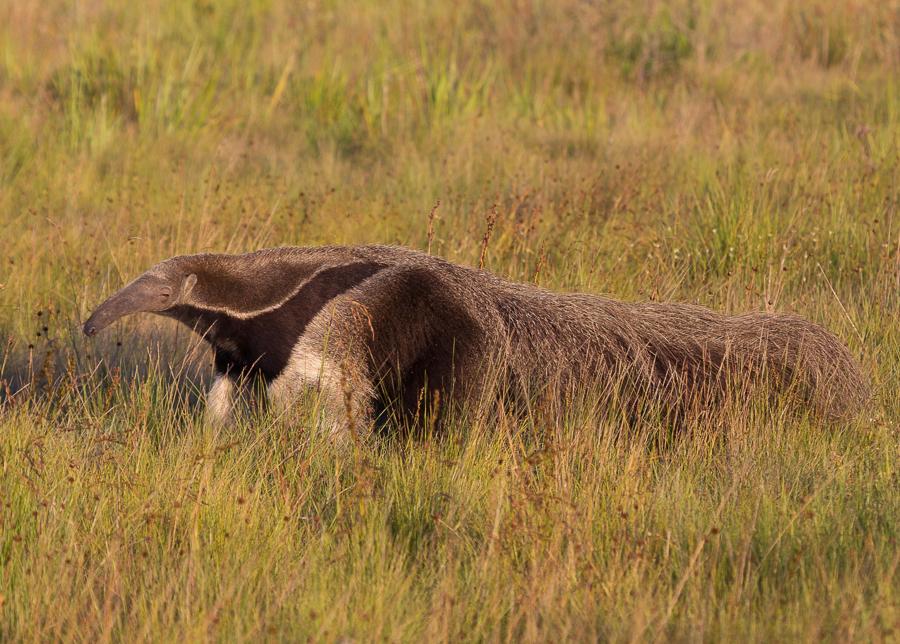
The Giant Anteater Eats Exactly What You'd Expect
by Edna Torres, age 7
Have you ever wondered where anteaters get their name from? Anteaters are animals named for their unique purpose: eating insects.
Anteaters are known for tracking down insects, especially ants and termites, and eating them with their long, sticky tongue. Anteaters have an interesting body; they are closely related to sloths and armadillos. They all have long skulls and no teeth. Their eyes, brains, and mouths are tiny compared to those of animals of their size. Despite this, anteaters have a really long tongue, which is 23.6 inches long, and their bodies weigh between 44 and 86 pounds.
Anteaters have a fluffy tail that serves many purposes depending on the time of day. In the morning, it helps them by providing shade, and at night, it protects them from predators and serves as camouflage. Anteaters have dense hair around their entire body to protect them from ant bites. Their long nose is very sensitive. They also have five claws; two of the five claws on each forefoot are four inches long, and they use them to get inside ant and termite nests. The anteaters walk on their knuckles because of their long claws.
Anteaters can be found in southern Mexico, South America, and part of Argentina. They usually live in savannas, swamps, and forests. There are also four different species of anteaters. The giant anteater, the northern and southern tamandua, and the silky anteater are all ground-living; but the Cyclopes didactylus anteater species is tree-living and nocturnal.
Anteaters have a unique appearance, but they are also interesting because of their specialized adaptations for their diet. There is much we can still learn about the anteaters.
[Source: The Encyclopedia of Animals]











Loading Comments...