Nature's Master Carpenter: the Woodpecker
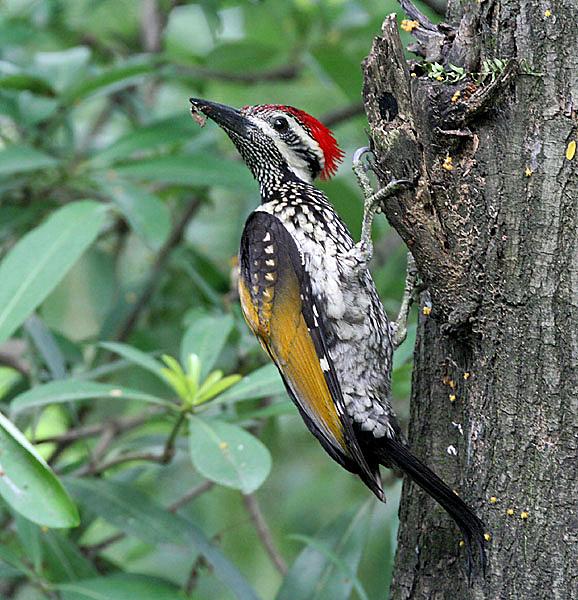
by Celestia McPark, age 8
Woodpeckers come in vivid colors and look like a bird with two toes pointed. The tail feather helps balance when pecking. Woodpeckers are colorful birds that live all across North America, and they might even live in your backyard.
Woodpeckers do not harm people; however, they can be harmful to homes by making nests in houses and may attack the house. Woodpeckers live in many areas; however, they often avoid the Southwest. They can even live in cold weather, down to -30 degrees Celsius or -22 degrees Fahrenheit.
They make their homes in forests, woodlands, suburbs, and deserts. You can find them in various types of trees such as pine, maple, birch, cottonwood, and oak. Most birds migrate during cold weather, but many do not, like the Red-bellied Woodpeckers, Downy Woodpeckers, Hairy Woodpeckers, and the Pileated Woodpeckers. Yellow-bellied Sapsuckers and Northern Flickers do migrate.
Woodpeckers have a diet that includes insects. Their diets are nuts, seeds, fruit, berries, tree sap, and any animal that lives in a nest. Woodpeckers have a diet that includes insects and larvae. The food in the bird feeders contains suet, peanuts, and seeds. Their prey are beetle larvae, spiders, ants, termites, and caterpillars.
Woodpeckers dislike peppermint oil, citrus, garlic, and vinegar. If they eat pesticides or bugs, they can become sick and even die. These birds are not allergic to poison ivy in the fall and winter; they eat ivy berries as a food source.
Scientists have collected data on woodpeckers by placing a device that records the woodpecker's movements on the woodpecker's muscles. The devices look like tiny backpacks wrapped around the woodpecker’s arm, and the data show that it takes a breath lasting 40 milliseconds, which is faster than a human blink.
Woodpeckers are birds commonly seen across North America. There are many types of woodpeckers, each with its own special features. Though they do not harm humans, they can damage homes. Despite the potential damage to homes, woodpeckers are important to the ecosystem because they eat insects, peanuts, and seeds.
[Source: snexplorse.com; audubon.org]











Loading Comments...