Colorado Wildfire Risk Reaches Historic Levels
by Oliver Zink, age 15
Ski resorts in Colorado are wrapping up one of the worst ski seasons that anyone can remember due to historically low snowfall. The most obvious effects are slushy skiing and barren hills, and officials are very concerned about the wildfire risk as not just ski towns are at risk.
The American West is experiencing a historic snow drought. The snowpack has been the lowest ever recorded going back 40 years. Jennifer Morse, a scientist at the University of Colorado, studies snow and lives in the town of Nederland, Colorado. In the past 20 years she has lived there, she has never seen so little snow.
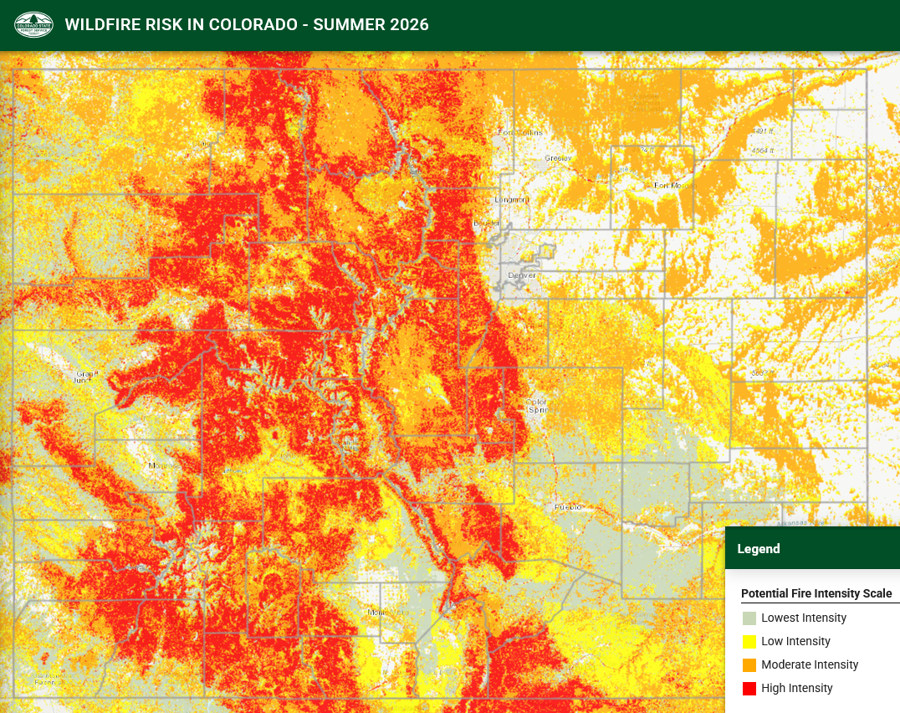
The Rocky Mountains could experience an unusually early and possibly severe fire season. Snow melting provides soil moisture and prevents plants from drying out and supplying wildfires. Warming temperatures have caused snow falls to decline across the American West. Wildfires have doubled in frequency and have gotten more intense. Wildfire risks in Colorado, New Mexico, Arizona, and Utah will all be above average this June.
Recently, there have been winds up to 90 mph around Boulder, Colorado. Thousands of people lost power and officials prohibited campfires to reduce wildfire risk. The Governor of Colorado, Jared Polis, released a statement saying the state will spend $7 million on wildfire grants. Local utility companies are leaping into action during heavy winds so sparks do not start a wildfire.
Low snowpack also affects water supplies. States like Colorado rely on snow for up to 80 percent of their water. The snow builds up over the winter and melts in warmer seasons and runs into streams and reservoirs. This provides water for municipal water supplies, private wells, and ski resorts. Ski resorts use significantly more water as they are making more snow. In some resorts like Eldora Mountain, they point the snow makers toward the buildings ready to spray water in case of a fire when the machines are not in use. The resorts fuel local economies and some towns own the ski hills to pay for town services. Businesses have seen a decline in sales but their more pressing concern is the wild fires.
Some locals are taking precautions. Local rancher Kayla Evans, has spent the last three years thinning the trees surrounding her family’s farm. This is called a fire break, an area with no vegetation that slows or stops a wild fire. Fewer trees can help snow packs stick around longer. Locals are also worried about visitors starting campfires and ignoring the bans putting everyone at risk. Colorado and other states will most likely have campfire bans and other bans to attempt to prevent wildfires. Western states are nearing the end of winter and there is no chance of catching up to a normal year
In early March ski resorts received a foot of snow. Throngs of skiers went to the slopes. However, by the end of the week all the snow had melted and temperatures hit highs of 65 degrees. The storm was a drop in the bucket compared to the usual snowfall.
Ski resorts are seeing lower sales than previous years. The less snow caused ski resorts to promote off-mountain activities. For almost all resorts across Colorado’s western mountains, spring break is normally a strong period for tourism. People come from in and out of state. Ski resorts prepare for visitors with deals and businesses organize events around the crowds. The dry conditions are heavily affecting all aspects of tourism and the Rocky Mountain states.
Steamboat Springs, Colorado, is a popular destination, however bookings are down 10% this year. Many people are not making the trek for spring break. This will lead to an impact on the town’s sales tax collections. Last-minute reservations were down, however people who booked long ago are still visiting. Many tourists have been going farther west to areas such as northern California. Bike rentals, fly fishing and sightseeing are receiving more attention.
The low snowfall has caused a decrease in ticket sales and has helped create conditions for wildfires. The ski hills will push through the challenging times, however if there are lots of wildfires it will take more than just a year of good snow to fix it.
[Sources: New York times; VailDaily; Colorado Forest Atlas]











Loading Comments...