Invasive Mussels Threaten Great Lakes but New Methods Offer Hope
by Will DeFour, age 15
As invasive mussels devastate the Great Lakes, scientists are looking into new ways to combat the threat and protect important parts of the local ecosystem, such as spawning grounds for native fish.
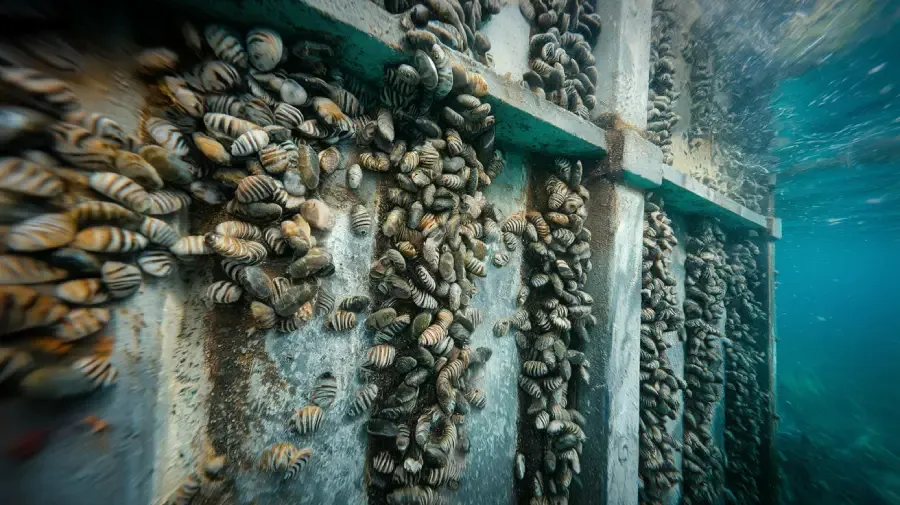
Ten years ago, a group of divers led by Harvey Bootsma researched algae growth and its connection to the invasive zebra and quagga mussels. In their study, they scraped the mussels off a portion of the lakebed near Sleeping Bear Dunes, Michigan. As the scientists returned over the years, they noticed something odd: the mussels did not grow back. After a decade, there are still a few mussels that have been able to regrow. The mussels struggle to return because an invasive fish, the Round Goby, eats the mussels before they grow big enough to become a problem.
With the help of the Round Goby, marine biologists across the Midwest are trying to push back against the mussel invasion. A team led by Bootsma has cleared a 540-square-foot area by towing a 1,100-pound plate behind a boat to destroy the mussels. Last year, scientists from the National Oceanic and Atmospheric Administration (NOAA), one of the key players in the fight against the mussels, created a tank-like machine to crawl across the lake bed and clear mussels in a 2,000-square-foot area. These projects, if targeted in spawning grounds and other important areas, can greatly benefit native species. However, this federally funded project is facing new threats as the Trump administration's budget cuts are taking funding away from marine organizations, including NOAA.
The zebra and quagga mussels have had a devastating effect on the Great Lakes to the point that their impact is visible from space. Divers, scientists, and marine biologists are all working together to fight back and lessen the severity of their impact on the Great Lakes.
[Source: Milwaukee Journal Sentinel]











Loading Comments...