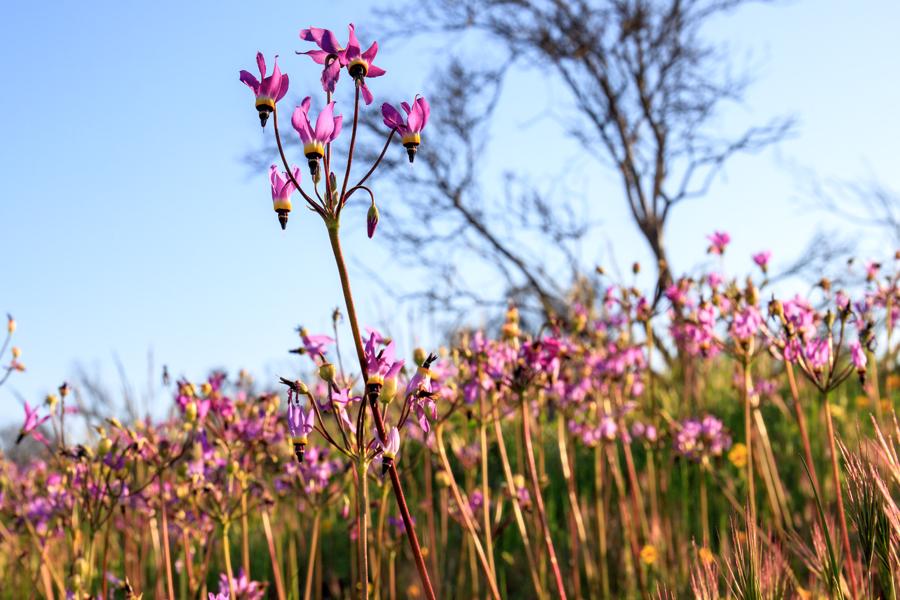
Shooting Stars Light Up Meadows and Prairies
by Niko Sayu, age 11
The shooting star is a wildflower native to North America, belonging to a group of perennials in the primrose family (Primulaceae). Many variations of the shooting star exist, and all of them have their own unique features.
Shooting stars include several recognized species and cultivated varieties. For example, Dodecatheon meadia, often called the Eastern shooting star, is one of the most widespread. Garden varieties include selections like Alba, which is small with white flowers, and Aphrodite, which produces larger, dark pink flowers with yellow tips. Goliath forms have taller stems with large flowers, while Queen Victoria is noted for its pink blooms with a pronounced white and yellow ring.
Many color variations also exist outside of these cultivated forms. For example, amethyst shooting stars tend to have a blended red-purple color. In the wild, flower color varies by region, with plants in southern habitats often showing paler white or rose hues, while northern populations may have deeper red or purple shades.
Shooting stars grow across much of the central and eastern United States. Their northern range spans from southern Wisconsin to western Pennsylvania, while their southern range extends to eastern Texas and Georgia. These wildflowers are also known by many regional names, such as Eastern Shooting Star, American Cowslip, Roosterheads, or Prairie Pointers.
The shooting star blooming season lasts from late spring to early summer, but they cannot be grown from seed to flowering in one year. It typically takes about three to four years for seedlings to mature and bloom. Once established, shooting stars are long-lived perennials that return year after year.
The shooting star is a perennial wildflower that grows across the United States. It comes in many sizes and colors, often unique to their regions, and is indeed a beautiful sight in nature.
[Source: Wisconsin Horticulture]











Loading Comments...