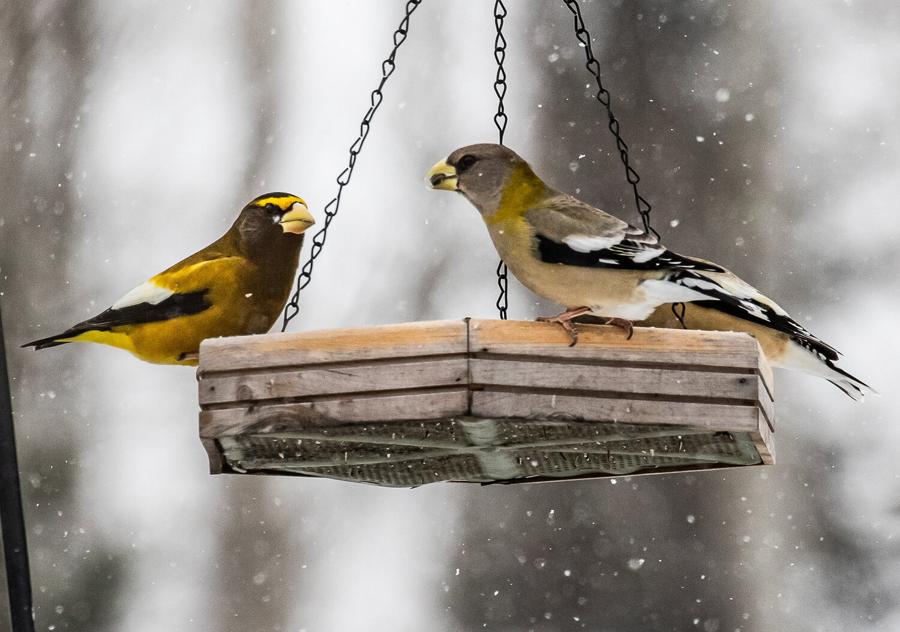
Winter Finches Are Taking Their Time to Migrate
By John Agbo, age 14
This year’s Winter Finch Forecast released by the Finch Research Network suggests a slower year for migratory birds arriving in Wisconsin.
During the winter, many species of Wisconsin’s migratory songbirds fly South, searching for food sources and warmer temperatures. This season also usually attracts birds from farther north, from Canada, for the same reasons. The number of birds flying to Wisconsin and other states varies every year, depending on the availability of crops and berries. However, recent patterns indicate that many birds hesitate to make this journey. They have remained in their northern habitats longer than usual.
The migration patterns of finches help predict the migratory patterns of other birds and are connected to the availability of food sources in their homes in the boreal forests in Canada. The Finch Research Network has cone crop reporters on the ground who monitor the abundance of cone crops and berries in Canada. Based on their reports, the Winter Finch Forecast is created, analyzing bird movement patterns and preparing residents for roughly how many and which birds to expect. The forecast generally pertains to Ontario and nearby areas, including Wisconsin.
In years of plentiful crops, fewer birds travel South. However, when crops are scarce, more birds set out southward in search of food. A seasonal dwindling of natural food sources would normally prompt migration, yet vegetation has shown remarkable resilience this year, even thriving through winter. Ryan Brady, bird expert and conservation biologist with the Department of Natural Resources, said Wisconsin residents will see fewer birds this winter, since “fruit and cone crops are plentiful north of Wisconsin.” The sheer quantity of available food in their boreal homes has altered their usual behavior, showcasing the intricate connection between flora, fauna, and the climate.
The cone crop this past year reached from eastern Quebec to British Columbia, spanning the width of the entire continent. Droughts, forest fires, and insect infestations have caused some holes in the cone crop. However, there was plenty among some of the finches’ favorite food sources, particularly the white spruce and tamarack trees, along with white birch and balsam fir trees. There was also a large berry crop, including in northern Wisconsin, and one cone crop reporter said, “Basically any plant with a berry produced this year.”
The forecast indicated that Wisconsin would likely have low numbers of pine grosbeaks, redpolls, and white-winged and red crossbills. Moderate numbers were expected for purple finches and pine siskins, while evening grosbeaks were expected in higher numbers.
Save Our Songbirds, a Wisconsin-based bird conservation initiative, shared several tips for individuals hoping to attract some of these birds to their yards. Plant native trees and shrubs, like birch and spruce trees, to create a natural food source and hiding or roosting spots for the finches. Use high-quality birdseed, like Nyjer or black oil sunflower, with a high-fat content. To balance out their dry fruit and seed-heavy diet, add a body of water, such as with a bird bath or small fountain.
For bird watchers and enthusiasts, the Winter Finch Forecast signifies an exciting season of visiting finches. This year, though there was a smaller and slower forecast than usual, there are still plenty of finches stopping by in Wisconsin for people to see and feed.
[Sources: Finch Research Network; Save Our Songbirds; Wisconsin Department of Natural Resources]











Loading Comments...