Two 7,000-year-old Mummies Change How Experts Study the Sahara Desert
by Andrew Huang, age 12
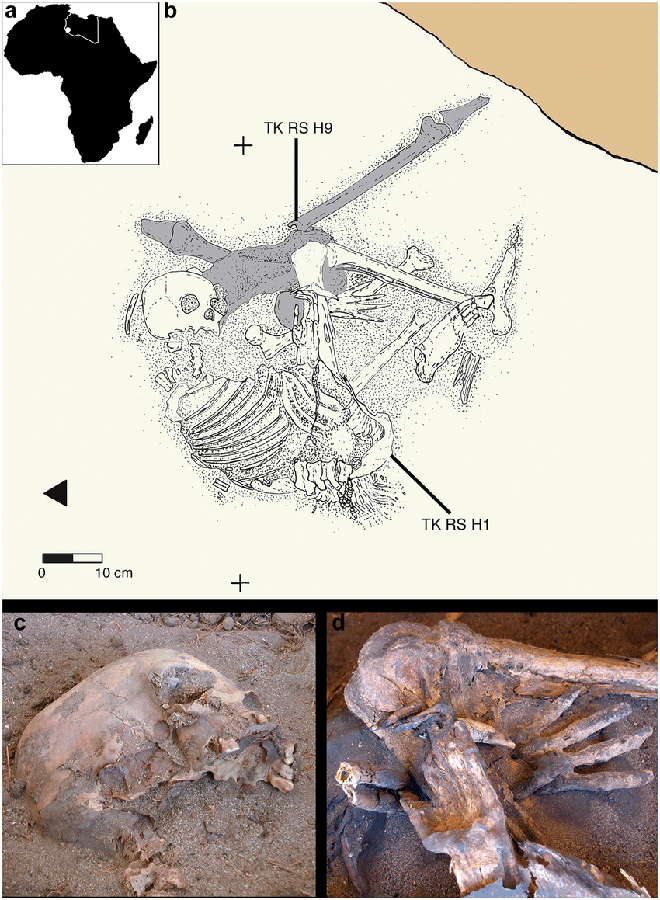 Usually, when a mummy is discovered in the Sahara Desert, scientists expect it to have some sub-Saharan genes. However, when two mummies over 7,000 years old were discovered in the Takarkori rock shelter, an archaeological site located in the Tadrart Acacus Mountains of southwestern Libya, they did not have the sub-Saharan genes.
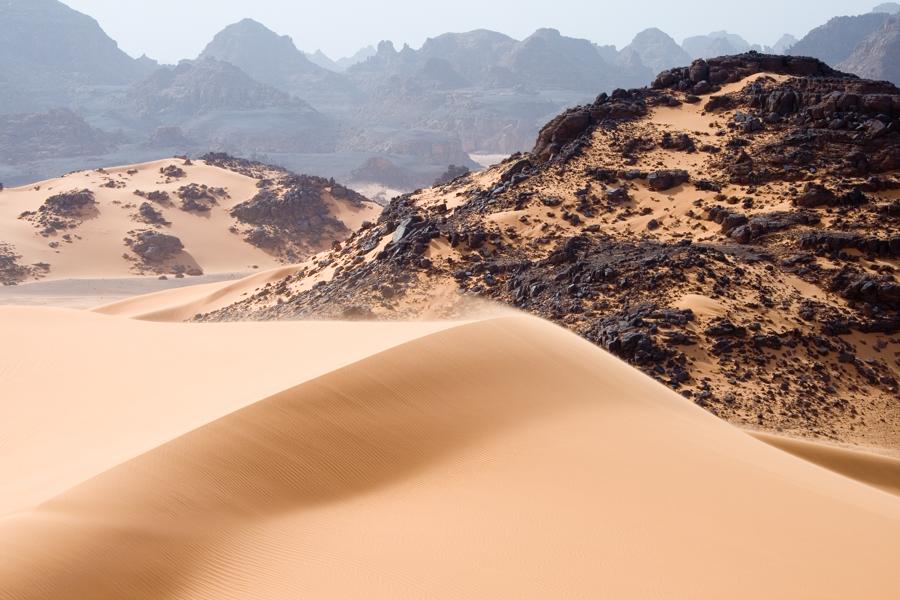
For the last 5,500 years, the Sahara has been a desert. In contrast, between 5,500 and 14,800 years ago, during what is known as the African Humid period, or Green Sahara, the Sahara was a lush place.
During this time, the Tadrart Acacus Mountains area was filled with wildlife, water, and humans. The site is located near the city of Ghat in Libya near the border of Algeria. Some of the best-preserved ancient rock art in the world is visible in the area.
Early people settled there due to favorable conditions for hunting, gathering, and raising livestock. Among them was a group of enigmatic people, the Takarkori, who settled in present-day southwestern Libya. They should have been sub-Saharan genetically because of where they lived, but they were not.
The Takarkori are closely related to 15,000-year-old mummies from the Taforalt Cave in Morocco, as they both had around the same amount of genetic distance from sub-Saharan groups during that time. The two groups both split from an unknown North African lineage around 50,000 years ago, but the Takarkori were similar to the Taforalt, even though they should have evolved separately and had nothing in common.
This new discovery suggests that there was little to no gene exchange between sub-Saharan Africa and North Africa at the time. The Taforalt people had only half the Neanderthal genes of non-Africans, compared to the Takarkori, who had ten times less.
However, the Takarkori still had more Neanderthal DNA compared to other sub-Saharan humans during that period.
While the Takarkori evidently had less contact with Neanderthals compared to the Taforalt, they unquestionably had more contact with other groups, as there were traces of DNA exchange between them and farmers from the Levant.
The Takarkori people practiced pastoralism, a type of herding. After researchers closely examined the mummies, they deduced that the practice had been brought in from the Eastern Mediterranean around 6,400 years ago. But scientists found no significant genetic evidence connecting these people to Mediterranean farmers. Researchers now believe the two groups exchanged ideas, not genetics.
Many more mummies, fossils, rock art, and artifacts are buried in the depths of the Sahara, waiting to be discovered. Scientists and archologists want to learn more about what life was like in the Sahara during this ancient time.
When the Sahara was still a lush and green savannah, it was filled with animals and had plenty water. The area was also home to various groups of people and became a crossroads for human migration.
[Sources: Popular Mechanics; Natural History Museum]











Loading Comments...