Learn How Dinosaur Fossils are Formed
by Bruno Torres, age 8
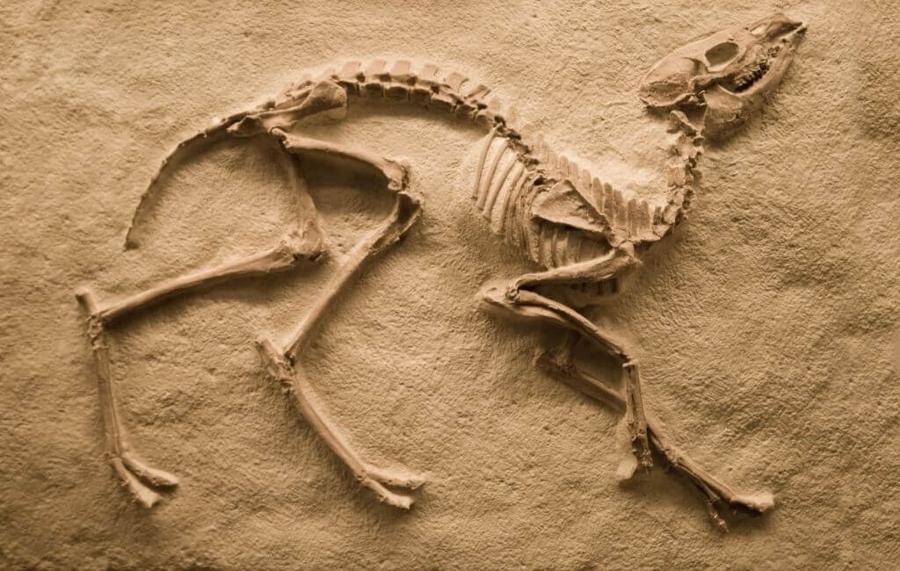
When visiting dinosaur museums, one typically encounters large reconstructions of dinosaurs with what appears to be their bones. In reality, these structures aren’t bones but are called fossils. Fossils are features or remnants left behind after animals and plants die, typically dating back at least 10,000 years.
Fossils can include bones, teeth, footprints, skin impressions, burrows, nests, and even feces. There are two main types of fossils: body fossils and trace fossils. Body fossils are made up of preserved parts of an organism, like bones, teeth, and shells. Trace fossils are impressions or evidence of an organism's activity, such as footprints, burrows, or coprolites (fossilized feces).
Not all ancient animals will become fossils because many are scavenged or decompose naturally when they die. However, remains that are not eaten and are buried under the right conditions can be preserved for millions of years. Most fossilization occurs when organisms are rapidly buried by sediments like sand, mud, or silt, which protects the remains from rotting. As soft parts of the body decay, harder parts like bones and teeth are left behind. Over millions of years, minerals in groundwater can seep into these hard parts, gradually replacing the organic material in a process called permineralization, leaving behind a solid “rock copy,” or fossil.
Fossils are mainly found in sedimentary rocks. Paleontologists use several techniques to find fossils, such as satellite imagery and geologic maps, to examine the various rock layers before excavating in certain areas. They often search in “badlands,” areas with little vegetation, barren ridges, and ravines where erosion exposes rock layers. When a fossil fragment is found, paleontologists carefully brush away loose dirt to reveal more of the specimen buried underground. Other tools like hammers and chisels are used to remove rocks and harder material covering the fossils. As more of the fossil is revealed, a special consolidant is applied to cracks to hold everything together.
Once the excavation is complete, a protective layer of damp paper is placed on the fossils before they are covered with plaster bandages to create a hard cast. The hardened cast allows for the safe removal of the fossil from the site and transportation back to museums and research facilities for further study.
Fossilization is a lengthy and complex process. Additionally, there are many steps required to excavate fossils and study them properly. Learning about the process of fossilization and the detailed work that goes into their study allows for a better understanding of the field of paleontology and how remains of the past guide the work done in the present.
[Source: American Museum of Natural History]











Loading Comments...