Another Moai Statue Discovered on Easter Island
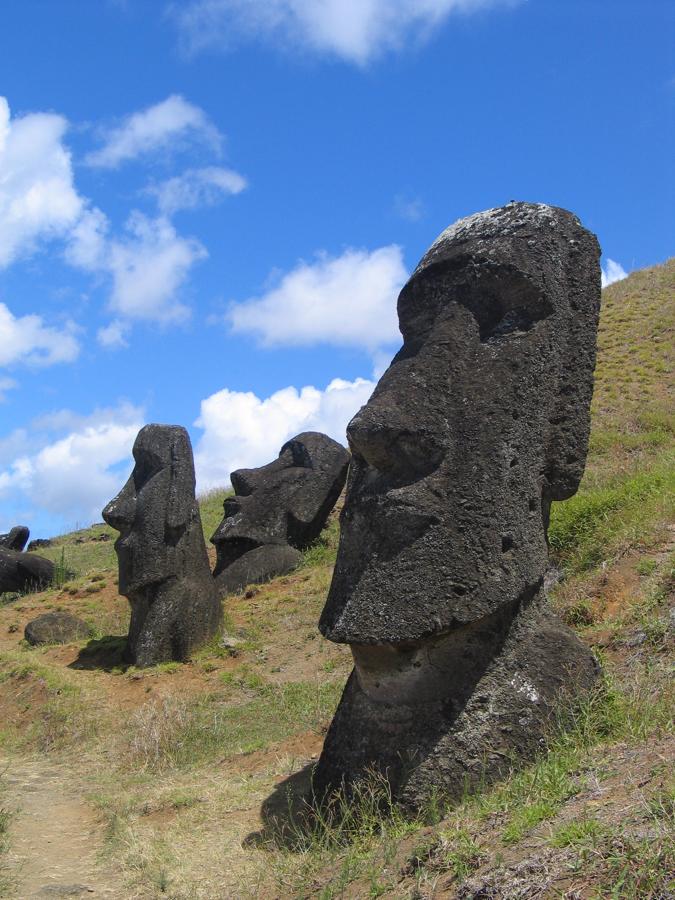
by Niko Sayu, age 12
Easter Island, or Rapa Nui, is an iconic landmass about 2,000 miles off the South Pacific coast of Chile, and is widely known for its massive ancient Moai statues. Scientists and researchers thought they had logged every statue on the island, but another has now been discovered in an unexpected place.
Moai statues were constructed by the island’s native people hundreds of years ago. They are made from tuff—a material composed of soft, compressed volcanic ash, which was easy to shape with the inhabitants' large stone tools. These statues were built to honor important people who had passed away.
The statues were mostly constructed in the island’s statue quarry on its south side, raising questions about how the statues were moved around the island. One of more popular theories is that the vast majority of the Moai statues were built on the south side of the island before being transported by 15 to 18 people across the island to where they stand today. Contrary to popular belief, the Easter Island statues are not just heads; in fact, many of them are mostly, if not fully exposed bodies in some parts of the island.
Recently, scientists discovered a new, smaller-than-average statue in a dried-up lake bed. Scientists thought they knew of every statue, but this discovery indicates there are more statues that could be found now that other bodies of water are drying up. This discovery could change much of what we know about Easter Island and potentially be vital in the discovery of more Moai statues.
[Sources: Easter Island Travel; National Geographic]











Loading Comments...