How a Meteorite Helped Create One of North America’s Largest Lakes
by Sofia Zapata, age 16
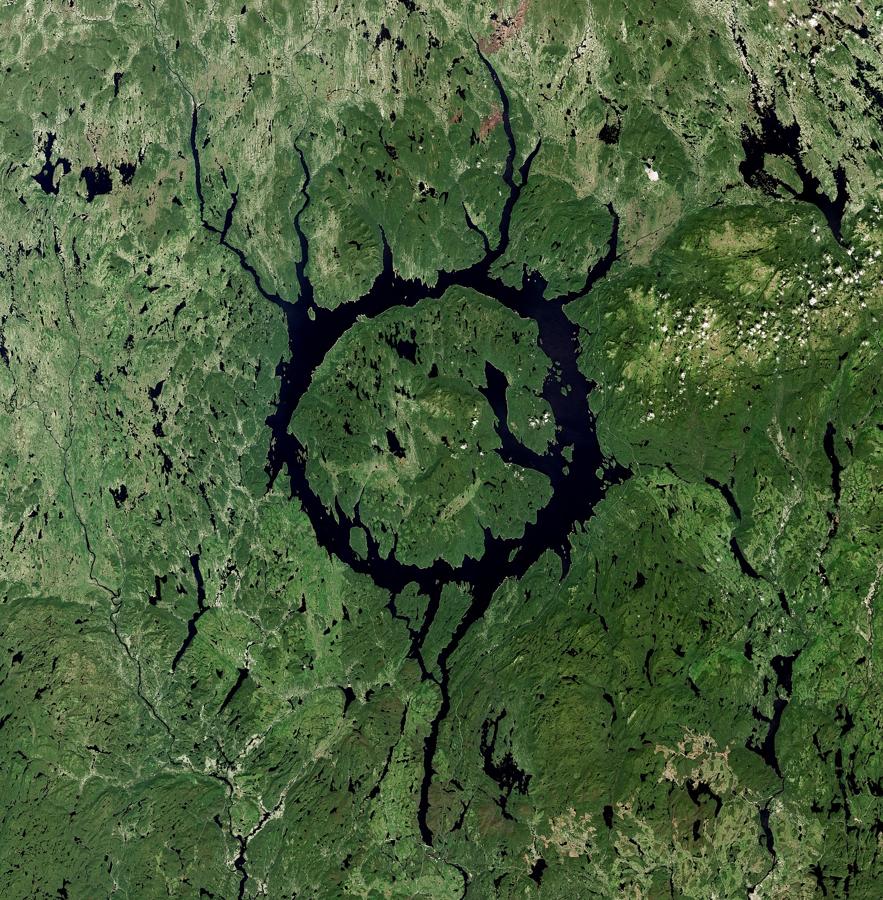
An asteroid created one of North America's biggest lakes, known today as Lake Manicouagan. This 214 million-year-old circular lake is visible on any map of Canada and is known as the “Eye of Quebec.”
About 214 million years ago, a meteorite crashed into Earth, creating a big crater in northern Quebec, Canada. At the time, it was part of the ancient continent of Pangaea. The meteorite was three miles wide and traveled over 30,000 miles per hour, causing a 350-meter-deep hole. It’s only in very recent history that this massive crater became a lake.
The reservoir was created in 1968, when humans constructed the Daniel-Johnson Dam to produce energy. After the dam was built, it blocked the Manicouagan and Outardes Rivers, which filled the crater.
Government and private researchers conducted many hydrological studies about the rivers in the 1920s, concluding that planned hydroelectric projects would not harm fish and wildlife. In the 1950s, workers began constructing dams on the Manicouagan-Outardes River system, including the Daniel-Johnson Dam.
Lake Manicouagan shows the beauty of human and natural creations, to the point of seeing it from the sky. The asteroid and the backflow from the dams helped create the geographical feature today known as one of the biggest lakes in North America.
[Sources: Canadian National Park Service; worldatlas.com]











Loading Comments...