New Medical Breakthrough May Someday Enable Human Adults to Regrow Teeth
by Brooklynn Miller, age 12
Researchers at Kyoto University Hospital in Japan began trials of a tooth regeneration drug, only a test for now, in October 2024. This is the first medical experiment solely focused on stimulating biological tooth regeneration in adults.
Surprisingly, it has been proven that the medicine is not merely creating something from an idea, but is rather unlocking a process the body already knows how to do. It is something we have already, and always, had.
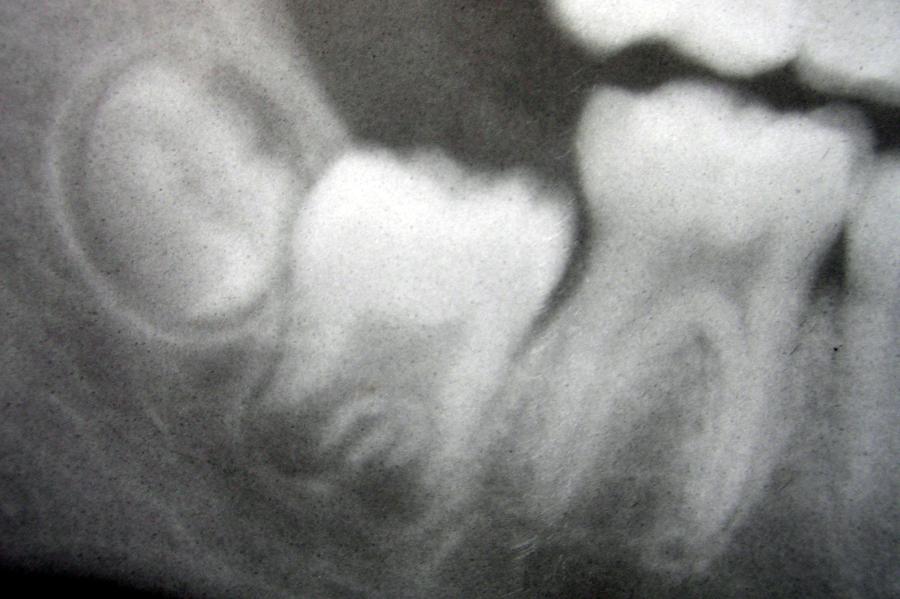
This is the dormant tooth bud. Dormant tooth buds are a biological structure inside our mouths capable of making a third set of teeth. Our body has just been suppressing it. If it passes the tests, researchers say, the treatment should be available in 2030.
The scientist who is currently working at the head of the experiment is Dr. Katsu Takahashi, who is also head of both dentistry and oral surgery in Osaka, Japan at the Medical Research Institute of Kitano Hospital. He has been persistent with this experiment, working for about three decades on this drug. Thankfully in favor of Takahashi, the turning point came back in 2007.
In 2007, Dr. Takahashi’s team discovered a mouse model. Surprisingly, it had more teeth than usual, which was a very strange coincidence and an unusual characteristic. Furthermore, the mouse was simply lacking the protein of Uterine Sensitization – Associated Gene-1, also known as USAG-1 for short. Scientists noticed that without the USAG-1 protein, the mouse was able to grow another set of fully formed, adult teeth instead of suppressing new bud growth.
USAG-1 is supposed to halt all molecular tooth development and bud growth after the functional adult teeth form. However, if someone were to lack the protein, new buds can start to form. So, with this newfound knowledge, the answer was clear: remove that USAG-1, and you wake up the inactive teeth. Without the USAG-1, tooth embryos overgrow. Thus, scientists came up with an idea: to make an antibody that can suppress USAG-1 and allow for new teeth formation.
With this knowledge, Takahashi spent the next decade with his team enhancing the antibody drug. First, they tested on mice, then ferrets, which the research team had explicitly asked for due to their similar tooth structure to human dentition.
After studying the animals, they found that even a single antibody administration proved complete and successful; the functional teeth had fully formed with existing dental structures. There were no serious side effects throughout the experiment.
The company was quite dedicated to translating the lab findings into a functional, usable drug that was accessible to humans. The resulting treatment has been named TRG-035, a moAbs formulation made to cancel out and neutralize the protein of USAG-1 and allow latent tooth-growing volume to resume. The product was at an obvious point to the company to start testing on willing people.
October 2024 marked the start of human trial phase I. Being directed at Kyoto Hospital itself, it was made to see if TRG-035 was safe for people. The experiment involved 30 healthy male adults, all ages ranging from 30 to 64, that were missing at least one tooth. They needed to see if it was safe, moreover what was a good dose.
Kyoto and Takahashi had decided that if the trial proved successful, they would move on to other phases, focusing more on young children, aged from two to seven years old without a full set of teeth, children who were diagnosed with congenital anodontia. The drug is being carefully dosed and being sent directly into the bloodstream. The researchers think the medicine may stimulate growth of their concealed teeth.
After 13 years, now in 2020, Takahashi had taken on the task of co-founding a Kyoto University spin-off named Toregem Isopharma. The trial ran through 2025 and still continues today. After that, Toregem plans to move into phase IIa trials. To know why this technology was not grasped before and why it took so long to make requires mostly on knowing what happens biologically to human teeth.
Humans on average are born with two full sets of teeth in the course of a lifetime. Your baby teeth, the first set, will typically fall out during childhood. Replacing them then comes your adult teeth: your permanent teeth that stay with you through early adolescence and adulthood. The process was said to be over from here, and with good proof, however scientists noted that there is a third set of teeth and were both curious and encouraged to know more.
Even Dr. Takahashi has stated to have proof that the third set is embedded in our mouths already. Hyperdontia is the growth of more than a full set of teeth, and is the best visibly-shown example of this. The third set of teeth is already there, with the biological machinery, but simply doesn't grow because of the USAG-1. If a USAG-1 antibody was able to be added into this third dental crest, we would be able to grow another row of teeth, even for adults who have grown their permanent teeth. This is the thought and insight that went into this program.
TRG-035 is not something made purely from scratch nor idea; Takahashi and his team merely removed an inhibitor from the body that already knows how to do this process.
[Sources: American Dentistry Association; France 24; Dentistry Today; Kyoto University]











Loading Comments...