New Theory Studies How Ice Age Hunters Used Clovis Point Technology
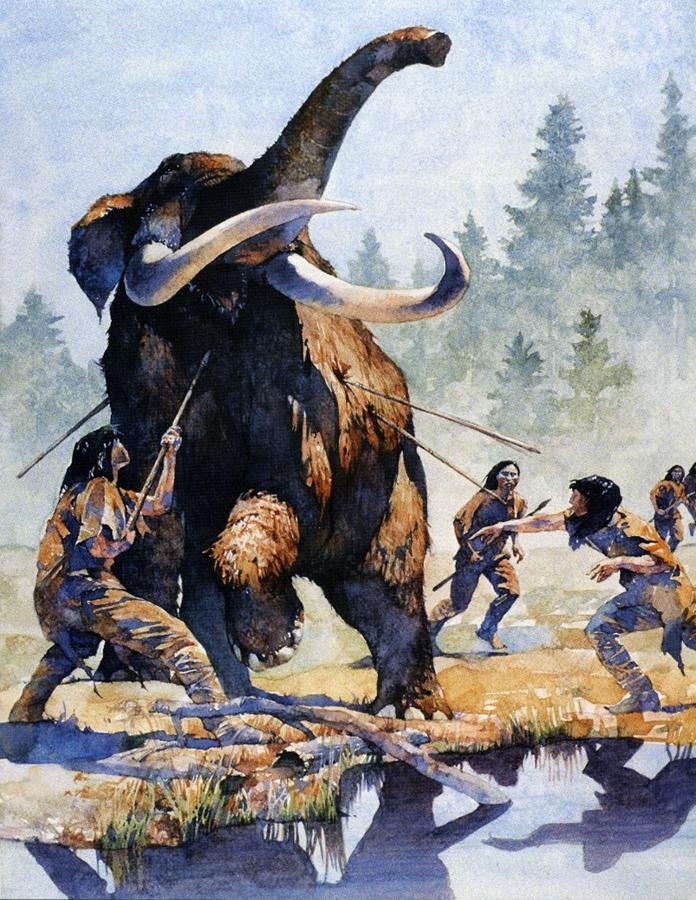
by John Agbo, age 14
Archaeologists have discovered intriguing evidence regarding hunting civilizations from 13,000 years ago during the Ice Age. The discovery showcased the hunting techniques of the Clovis people, offering a captivating glimpse into their resourceful ways of survival. Early humans, known as hominids, often hunted large prey like mammoths by surrounding them and attacking them with spears. However, research indicates this method was inefficient, as even a powerful thrust with a spear would likely only pierce a mammoth’s thick skin superficially.
Remnants of tools and weapons suggest that Ice Age hunters used ten-foot jagged stone pikes, a symbol of skill and survival in the dance of predator and prey. Pike hunting involves using a long pole or spear placed on the ground to skewer approaching animals, effectively immobilizing them for capture.
The alternative option for typical spear hunting was the Clovis point, a jagged stone spearhead with carefully cut edges. The Clovis people utilized them in North America. The craftsmanship of these weapons was extremely time-consuming, which motivated them not to lose, break, or let a wounded animal escape with one. Additionally, the tools had to be meticulously chipped to maximize their effectiveness and success, further emphasizing the importance of not losing them.
The points were found in a town in New Mexico around 100 years ago and were named after the town. Archeologists found thousands of points, some as large as a modern-day smartphone. Some were even found inside mammoth bones. They unearthed these specimens connected to short bone shafts, which were likely connected to a ten-foot-long wood shaft. When impaling a creature, the bone shattered and widened the opening, all the while cushioning the point, making it available for further use. The jagged points on the spear made the punctures worse, and they did better than normal spears.
Research suggests that this revolutionary weapon allowed people of all ages to hunt and bring down large prey that would provide them with considerable food and clothing.
[Sources: The Wall Street Journal; Texas State University]











Loading Comments...