John Adams and the Boston Massacre
by Dulce Vazquez, age 18
John Adams was the second president and a founding father of the United States of America. Years before he was elected president, John Adams' reputation was bolstered by his involvement in a high-profile legal case.
John Adams was born on October 30, 1735, in Braintree, Massachusetts and passed away on July 4, 1826 after suffering from a heart attack. Before the American Revolution, John Adams was a lawyer. During this time, he defended British soldiers who proceeded to court after being accused of murder during the Boston Massacre. Later on, this affected his reputation because many didn’t agree with his work as he didn’t demonstrate the Rule of Law. John Adams stated that soldiers acted in self defense, but the public didn’t agree.
Although John Adams took on a controversial case by defending Captain Thomas Preston and the eight British soldiers, he believed they deserved a fair trial. John Adams argued that the soldiers were being assaulted and harassed which led them to fire in self-defense. He spoke out and stated that this case was “one of the best pieces of service I ever rendered my country.”
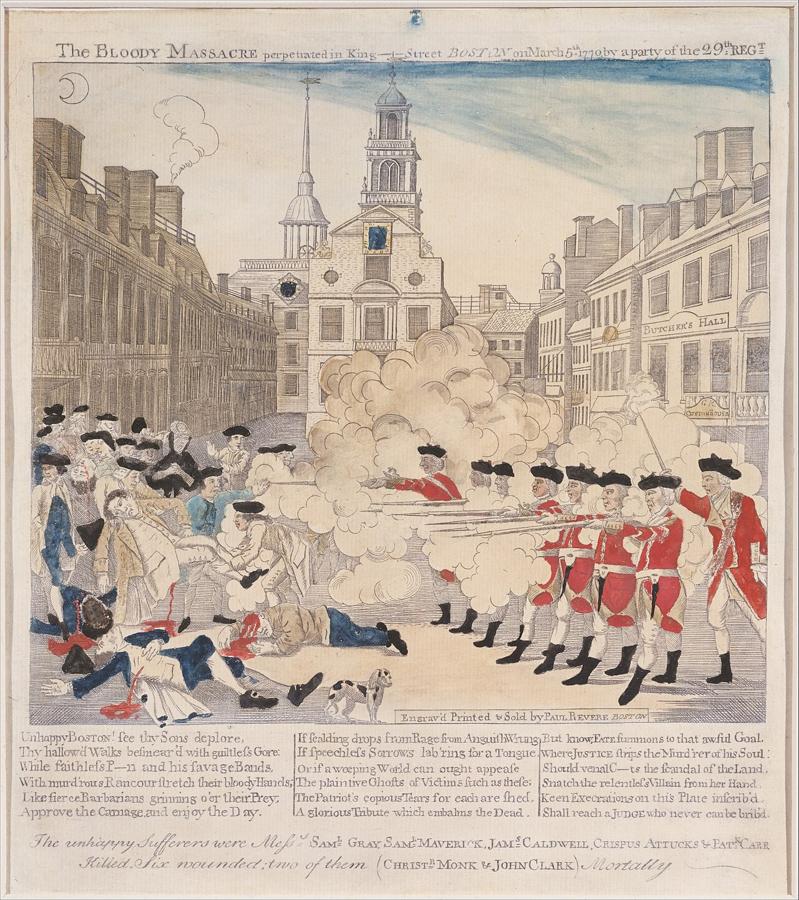
On March 5, 1770, British soldiers fired at a crowd of civilians ending in five deaths. This was later on named the Boston Massacre. The eight soldiers (William Wemms, Hugh White, Hugh Montgomery, James Hartigan, William McCauley, Mathew Kilroy, William Warren, and John Carroll) and their captain Thomas Preston were jailed. Their trial was delayed due to a high amount of tension. If the jury found Thomas Preston guilty for ordering soldiers to fire, the soldiers would be found not guilty for obeying orders. But if the jury found that the soldiers fired with no orders from Thomas Preston, they would be charged with murder.
On October 24, 1770 Thomas Preston’s trial began. It had a duration of six days, which was uncommon, as trials tended to last no more than one day. If Thomas Preston commanded these orders, he would be guilty for the five deaths. However there was not enough evidence to prove Thomas Preston commanded these orders.
The soldiers' trial began on November 27, 1770, weeks after Thomas Preston’s trial. The prosecution team was Robert Trent Paine and Samuel Quincy. John Adams said, “If an assault was made to endanger their lives, the law is clear, they had the right to kill in their own defense.” After the nine day trial, the jury decided six of the eight soldiers were not guilty and the remaining two, Hugh Montgomery and Matthew Kilroy, were guilty of unlawfully killing people.
The 1770 trials of the Boston Massacre left a legacy, but also a reminder of John Adams' belief that everyone deserves a fair trial.
[Sources: Massachusetts Historical Society; National Parks Service]











Loading Comments...