Boudica: Warrior Queen of the Celts
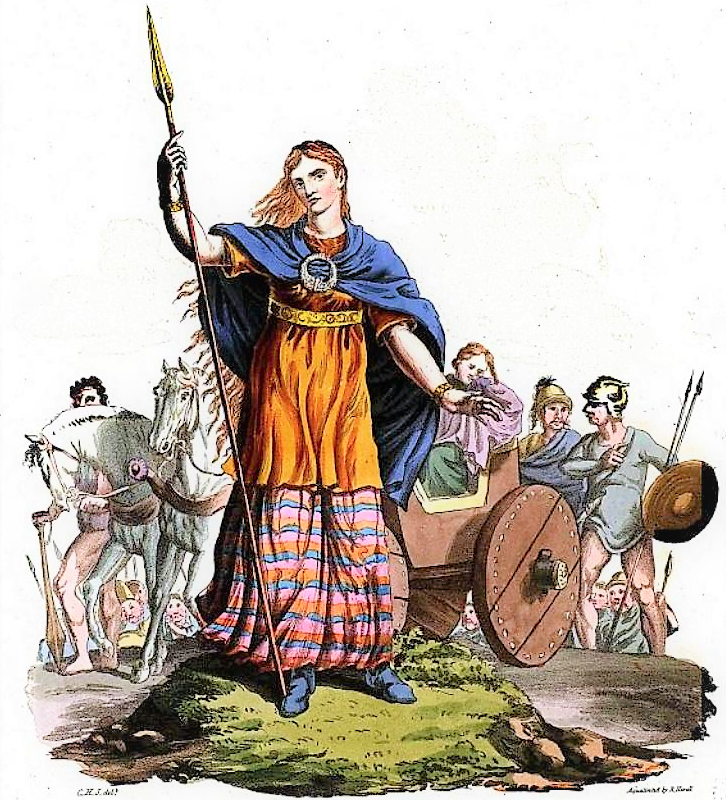
by Leah Santiago, age 12
Boudica, known as the Celtic warrior queen, was the ruler of the Iceni tribe in the area now known as East Anglia. A Roman writer, Cassius Dio, described her as “very tall. Her eyes seemed to stab you. Her voice was harsh and loud. Her thick, reddish-brown hair hung down below her waist. She always wore a golden torc around her neck and a flowing tartan cloak fastened with a brooch.”
One of Boudica’s major battles was the destruction of Colchester. Her forces destroyed the capital of Roman Britain and killed the people who lived there. She also burned down the city of Verulamium. However, she also lost several battles, including the Battle of Watling Street, where her army outnumbered her enemies but her opponents had a better strategy.
Boudica was born around 30 AD; however, this may not be completely accurate. She was born in east England, so she probably spent most of her life there. There are not many details about her childhood, but she likely witnessed the Roman invasion during her teenage years.
When Boudica was 18 years-old, she married Prasutagus, king of the Iceni, and they had two children together. Years later, Prasutagus died, leaving his wealth to his daughters. Unfortunately after his passing, his family was humiliated by the Romans.
Boudica led a rebellion against Rome after her Prasutagus’ death. She sadly lost the battle and was publicly humiliated once again. Boudica was believed to have died from illness, shock, or poison. Rumors are that she was buried under King’s Cross Station in London, but there is no physical evidence to support this.
Today, we remember Boudica as a symbol of freedom and a strong female leader. In one of her last speeches before death, she said to her troops, “If you weigh well the strength of the armies, and the cause of the war, you will see that in this battle you must conquer or die. This is a woman’s resolve; as for men, they may live life and be slaves.”
[Sources: Encyclopedia Britannica; Women Who Changed the World]











Loading Comments...