The Civilian Conservation Corps Transformed Wisconsin’s Landscape
by Daniel Li, age 17
In 1933 during the Great Depression, President Roosevelt launched the Civilian Conservation Corps (CCC) as part of his transformative New Deal program. This initiative provided much-needed jobs for young men while addressing critical needs across the United States. Over its nine-year lifespan, the CCC impacted both the natural landscape and the lives of millions of Americans, including those at Camp 657 in Wisconsin.
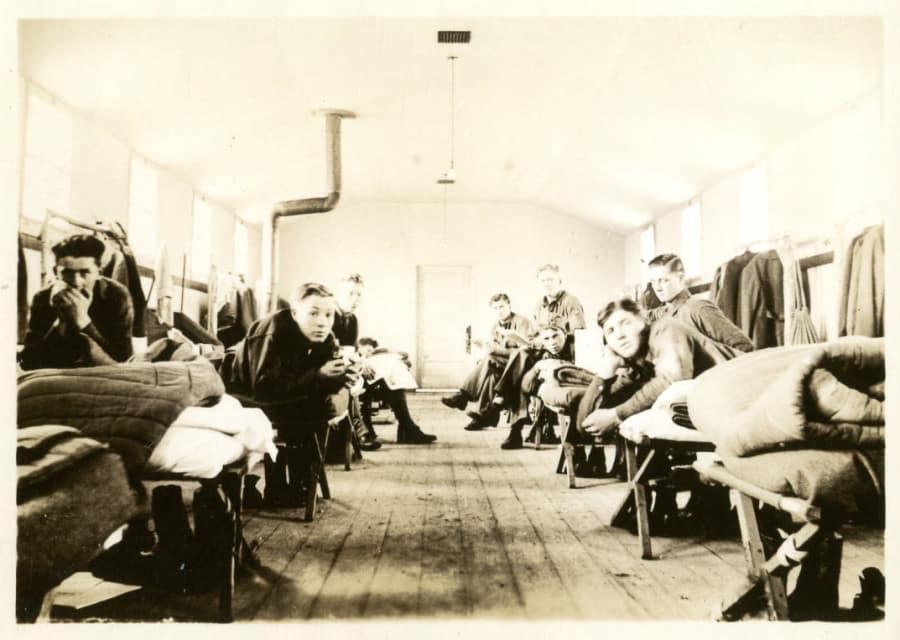
The CCC’s primary mission was to employ men to engage in conservation projects, reforestation, and construction of parks and public infrastructure. Camps were structured in a military format, with officers overseeing daily life. While this environment was consistent across the nation, regional characteristics shaped each camp’s culture, such as segregated camps in the South. By 1942, when the CCC was disbanded, over three million men had participated, and more than 4,000 camps had been established nationwide. The CCC’s legacy in Wisconsin includes Chequamegon-Nicolet National Forest, Devil’s Lake State Park, and Wyalusing State Park.
Camp 657, initially established in Fort Sheridan, Illinois, relocated to northern Wisconsin in 1933, eventually settling near Otter Lake in Elcho. Over its first four years, Camp 657 enrollees completed multiple tasks: constructing 83 miles of truck trails, 12 miles of fire breaks, 23 vehicular bridges, 235 miles of telephone lines, and multiple fire lookout towers and cabins. They also planted 1,379 acres of trees, stocked streams and ponds with fish, and improved forestlands and wildlife conditions.
The men of Camp 657, like their counterparts across the country, came from humble backgrounds. Many were from rural areas, and only a small percentage had completed high school. Each enrollee earned $30 per month, $25 of which was sent home to support their families. Despite the regimented lifestyle, recruits like Ed Drab found camaraderie and personal growth during their time in the CCC. Ed fondly recalled moments of humor and challenge, including an embarrassing yet formative experience when he froze atop a fire watchtower and had to be helped down by a camp officer.
The sense of community extended beyond work. Camp 657 offered diverse recreational opportunities, including sports teams, dances, and trips to local towns. The camp even formed a football team outfitted with discarded Green Bay Packers uniforms. Music played a significant role as well, with some enrollees forming a band that performed at the Elcho train depot. Camp life also fostered creative expression, as seen by the publication of the Woodchopper and later the Elcho Eagle, and camp newspapers that featured local news, humor, and stories of interest. For many, these moments provided a brief escape from the hardships of the Great Depression and a chance to form lasting friendships.
Although the CCC ceased operations in 1942, its legacy endures. The infrastructure and environmental restoration projects completed by the CCC have provided long-term benefits for Wisconsin and the nation. Parks, trails, and conservation efforts initiated during this time continue to serve as vital resources for recreation and wildlife preservation. The personal stories of CCC enrollees like Ed Drab add a human dimension to this legacy. From their regimented daily routines to the cherished mementos sent home, these young men’s experiences offer a glimpse into a transformative period in American history. For those who served, the CCC was not merely a job—it was a stepping stone to personal growth and a meaningful contribution to their communities and country.
Today, as visitors explore the trails and parks built by the CCC, they walk in the footsteps of the young men who, through their dedication and hard work, continue to inspire generations.
[Source: Wisconsin 101]











Loading Comments...