D-Day Marked a Turning Point in World War II
by Edwin Torres, age 14
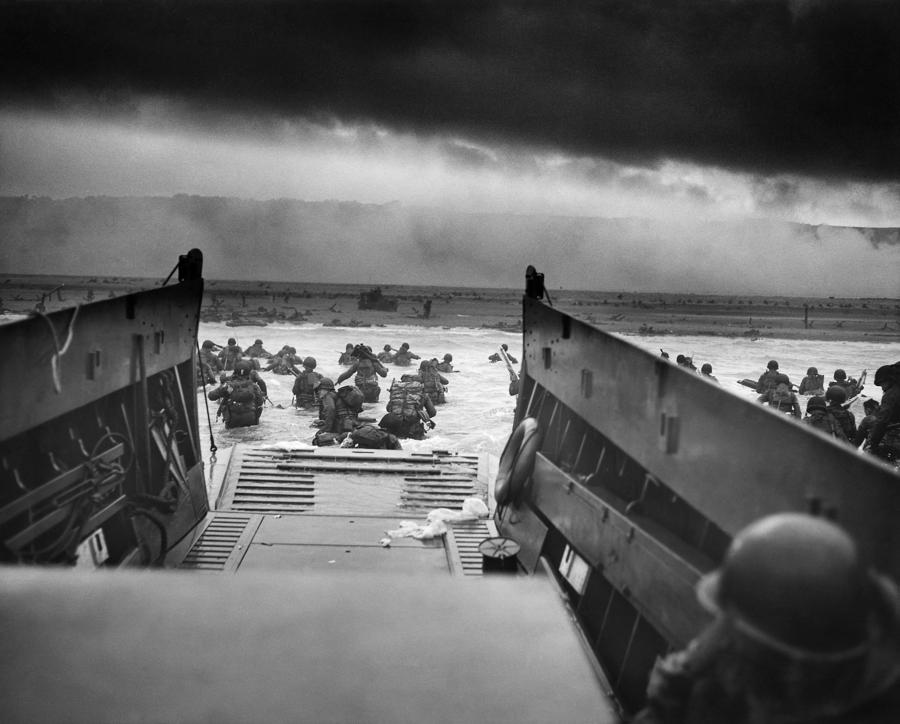
The D-Day invasion was the military operation in which Allied forces invaded Nazi-occupied France during World War II. On June 6, 1944, the troops from the U.S., the UK, Canada, and other Allied countries landed on the beaches of Normandy in Northern France.
At that time, France was under German control. The invasion was called Operation Overlord and was the largest combined air, naval, and land operation in history.
The invasion planning took years. After the Germans occupied and invaded France in 1940, the Allies began plotting on how to retake Europe. In 1941, the U.S. officially entered the war, and in 1942, British and American leaders were considering launching a major invasion across the English Channel. As a result, Adolf Hitler ordered German defenses to be strengthened beyond the coast. Hitler appointed General Rommel to command the defense of northern France. Hitler also ordered Rommel to complete the Atlantic Wall, a long system of landmines, bunkers, and beach obstacles meant to stop an invasion.
In January 1944, General Dwight D. Eisenhower was appointed commander of Operation Overlord. The Allies used false radio messages, pretend equipment, fake armies, and double agents to confuse the Germans into thinking that the invasion would take place at Pas-de-Calais instead of Normandy. This left Germany unprepared when the real invasion began.
The invasion was supposed to happen on June 5, 1944, but bad weather forced a one-day delay. On the night of June 5, more than 5,000 ships left England, carrying supplies and troops, and over 11,000 aircraft were ready to support the invasion the following day.
On June 6, Allied glider troops, as well as paratroopers, landed behind enemy lines to secure bridges and roads. At 6:30 a.m., troops began to land on five beaches. The Canadian and British forces captured Sword, Juno, and Gold beaches, while American troops landed at Omaha and Utah beaches. Fighting at Omaha Beach was dangerous. There were more than 2,000 American casualties and 4,000 total Allied casualties. At the end of the day, the Allies had successfully secured the beaches.
After D-Day, 156,000 Allied troops had landed, and within a week, more than 326,000 troops, 50,000 vehicles, and 100,000 tons of equipment had arrived at Normandy. Germany struggled to react fast because Rommel was away, and Hitler did not send reinforcements, believing the Normandy invasion was a trap. Hitler thought that Normandy was a trap to lure German forces away from the shorter route across the English Channel due to Allied deception campaigns suggesting that the main attack would happen at Pas-de-Calais, the closest point to England. This trick slowed the German advance, allowing the Allied forces to overwhelm the German troops and ultimately succeed.
As the weeks went by, Allied troops fought throughout landscapes such as hedgerows. When June was coming to an end, they had already captured the important port city of Cherbourg, France. In August 1944, Paris had been liberated, and the northern part of France was free from German occupation.
The successful D-Day landings marked a significant turning point in World War II. It blocked Germany from reinforcing its troops to fight the Soviets in the east, and it diminished Nazi authority throughout Europe. In May 1945, Germany officially surrendered, and the war in Europe officially came to an end.
[Source: History.com]











Loading Comments...