The First Lady of the World
by Sylvia Hoks, age 12
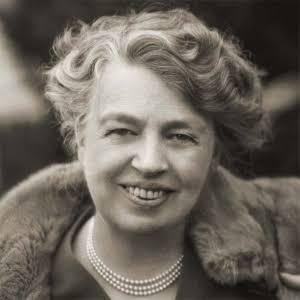
Eleanor Roosevelt is one of the most important women in American history. Not only was she the longest-serving First Lady, but she was also a dedicated activist. It was no surprise Harry S. Truman named her “The First Lady of the World.”
Eleanor was born in New York on Oct. 11, 1884. She was the niece of 26th president Theodore Roosevelt, and the fifth cousin once removed of Franklin Delano Roosevelt, her future husband. She had a difficult childhood after her parents separated due to her father’s alcohol addiction. In 1892, Eleanor’s mother passed away from diphtheria, a bacterial infection. Two years later, her father died from his alcoholism, causing Eleanor and her siblings to move in with their distant grandmother.
In 1899, Eleanor was registered into Allenswood Boarding Academy in Great Britain. Enrolling in the boarding school helped Eleanor to gain independence. After her time in Europe, she married Franklin and had six children.
Eleanor had a shaky relationship with Franklin after learning he was interested in her social secretary. This caused her to grow apart from him and become even more independent.
Eleanor felt strongly about social problems, but not so much about politics. She was involved in movements to abolish child labor and protect workers. So, in 1920, Eleanor supported Franklin when he campaigned for Vice President, even though she felt negatively about politics. Franklin got polio the following year, so Eleanor helped him even more, increasing her involvement in politics.
Franklin successfully became the 32nd President in 1933, which put a spotlight on Eleanor. She made the most of it by traveling around America, giving lectures, broadcasting on the radio, and even getting herself a column in the newspaper.
In 1939, Black opera singer Marian Anderson was not allowed to sing at Constitution Hall because of her race. When Eleanor heard about this, she arranged a new performance, which had an audience of over 70,000 people. She was also opposed to how Japanese Americans were being treated during WWII and helped her husband create laws to bar internment. Eleanor’s anti-racist views helped Franklin get more votes.
“My Day” was Eleanor’s newspaper column that she wrote from 1935 until her death. She only took four days off when Franklin died in 1945. Although Eleanor was worried she would not be an important figure anymore after Franklin’s death, she continued her activism. In 1946, Eleanor was chosen as the head of the United Nations Human Rights Commission. Sixteen years later in 1962, she died from tuberculosis, a blood disease.
As a child, Eleanor described herself as someone with “plain looks and lack of manners.” However, she was much more than average or “plain.” She was someone who cared about people and ensured that they were being treated fairly. Later in her life, she became someone people looked up to as a role model. Eleanor Roosevelt is an inspirational woman who continues to be admired to this day.
[Source: Women Who Changed the World]











Loading Comments...