Frank Lloyd Wright Made Wisconsin a Place of Beautiful Architecture
by Ayelen Flores, age 14
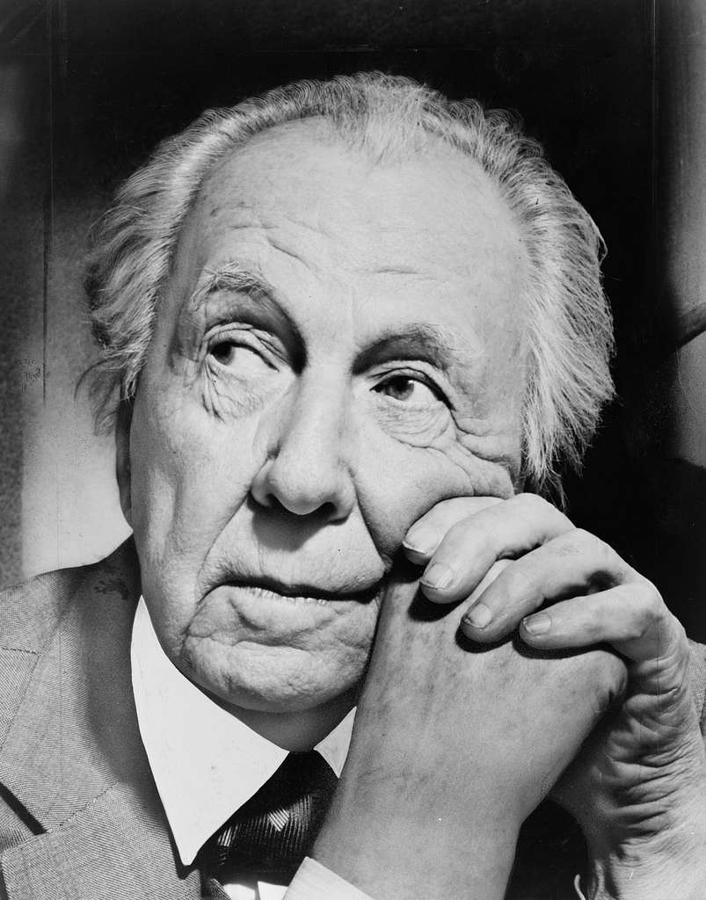
Frank Lloyd Wright remains one of the most beloved architects of all time. Throughout his life, he created many remarkable architectural works, most of which are located in Wisconsin.
Wright was born on June 8, 1867, in Richland Center, Wisconsin, to parents William Carey Wright, a musician, and his wife, Anna Lloyd Jones, a teacher. He and his family traveled a lot until 1878, when they settled in Madison, Wisconsin. His parents divorced in 1885. Wright‘s childhood was difficult due to financial problems, but he always tried to help. At 18, Wright worked for Allan Conover, a civil engineering professor at UW-Madison. While working and studying there, he developed a passion for architecture. He even claimed to have designed UW-Madison’s iconic Science Hall, however, this claim has been debunked. After graduating, Wright worked as a draftsman under the renowned architect Louis Sullivan in Chicago.
One of Wright’s early works while under Sullivan was creating his own house, where he lived with his wife, Cathrine Lee Tobin, and had six children. The house was located in the Chicago suburb of Oak Park. Wright incorporated many geometric shapes and played with empty spaces in the house, which showed his genuine passion for design. Even today, it is unclear whether Wright quit or was fired, but leaving the firm in 1893 gave him freedom and independence.
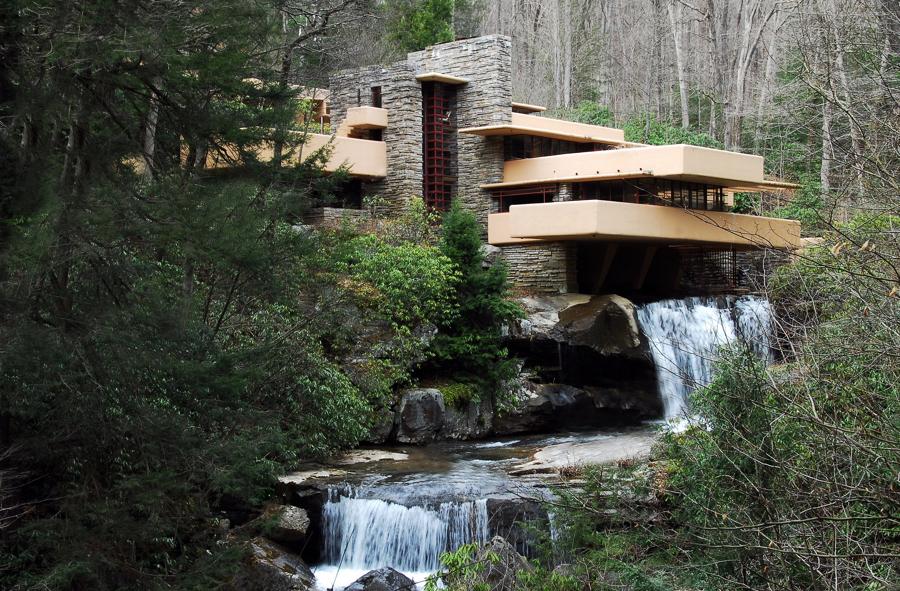
The William H. Winslow house was Wright's first project after Sullivan and marked the creation of a new style, now known as the “Prairie Style,” known for its long, low, and open structure. His astonishing work in this style between 1899 and 1910 inspired other architects. Wright minimized the walls in the Prairie house to show community. Throughout his work, he changed his architectural style to meet the demands of American society. For example, after the Great Depression began in 1929, he tried designing affordable housing that reflected economic realities and social trends. Wright created during that period a house known as the “Usonian house,” known for its simplistic yet elegant structure.
 Wright has made significant contributions to Wisconsin history. Four of his biggest and most known buildings include Monona Terrace, the Unitarian Society Meeting House, Taliesin, and Wingspread. The home of the J.F. Monona Terrace is a public building located on the shore of Lake Monona in downtown Madison and was completed in 1997, almost six decades after Wright initially designed it in 1938. The Monona Terrace was meant to be a “dream civic center,” providing a meeting space for governmental, cultural, and recreational events. It is well known for its spiraling exit and entrance to its parking lot, with vast arched windows overlooking the lake.
The Unitarian Society Meeting House is on the west side of Madison, at 900 University Bay Drive, and was finished in 1951. Tours are also given to the public. This building is recognized for its eye-catching triangle prow, which combines oak and glass to allow light to fill the auditorium. Where there isn't glass and wood, the building is made of limestone with a red concrete floor and a copper roof that pierces the sky.
Taliesin was Wright's home studio in Spring Green and is surrounded to this day by 600 acres of sprawling countryside. Wright lived in the house for over 50 years, from 1911 until his death in 1959, and continued to construct additions and changes to the building the entire time. The building caught on fire twice, and Wright had to rebuild it each time, trying out new ideas and uses of space. For this reason, many people see Taliesin as Wright’s self-portrait. Taliesin is the epitome of organic architecture, Wright’s favorite design style. The house and the furniture, also designed by Wright, were made of wood, glass, plaster, and limestone combined to make the building blend in with the nature around it.
Lastly, Wingspread, which opened in 1939, is located on the shore of Lake Michigan in Racine, Wisconsin. The 14,000-square-foot house on a 36-acre plot of land was designed for the Herbert Fisk Johnson family as their home. Wright’s style of organic architecture is seen throughout the building, and from above it resembles a four-winged pinwheel made of wood, brick, stucco, and limestone. The central living space is shaped like an octagon, with a 30-foot chimney connecting five separate fireplaces on three floors. From the center, the four wings of the house spread out to the surrounding landscape creating its low and neverending figure. Following Wright’s death, the Johnson family put the Johnson Foundation in charge of the house. It serves as an educational and conference center. It is also available for the public when meetings are not in session.
There are over 40 buildings in Wisconsin designed by “America’s greatest architect,” Frank Lloyd Wright. A few of them are available for the public to tour, visit, or rent. His unique style blending geometric patterns, nature, and utility, makes him one of the most memorable and unparalleled architects from Wisconsin.
[Sources: Frank Lloyd Wright Foundation; Milwaukee Journal Sentinel; The Metropolitan Museum of Art; UW-Alumni]











Loading Comments...