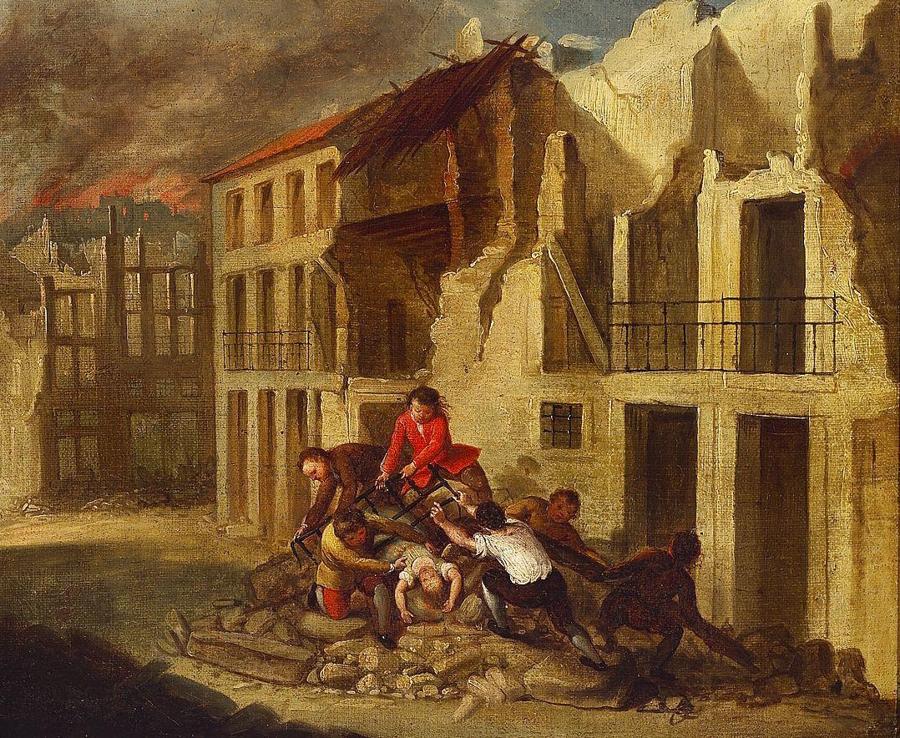
The Great Lisbon Earthquake
by Ruben Becerril, age 13
In 1755, a devastating earthquake hit Lisbon, the largest city and the capital of the Portuguese Empire. The earthquake destroyed the city and became known as the Great Lisbon earthquake.
In the first half of the 18th century, Portugal experienced a time of prosperity and wealth by gaining mass amounts of gold and diamonds from Brazil. During this period of time, Portugal had a strong alliance with the British Empire. Lisbon was crucial for world trade in Portugal and also served as a major center for Catholicism.
On November 1, 1755, the Great Lisbon earthquake struck Lisbon. The earthquake virtually destroyed the whole city, demolishing 85% of the buildings in Lisbon and killing between 10,000 and 50,000 people. The earthquake hit on All Saints Day, which killed hundreds of people inside of churches. Finally, the earthquake also had three tremors, the worst of which had a magnitude on the Richter Scale between 8.5 and 9.0.
In 1755, the Lisbon tsunami became a product of the earthquake. The tsunami impacted the coasts of Morocco, Spain, Madeira, the Azores, and even areas including the British Isles, the Netherlands, Brazil, Newfoundland, and the Caribbean islands. It mostly damaged Lisbon and other Portuguese fortresses on the coast.
Despite the Great Lisbon earthquake claiming thousands of lives, the earthquake created the foundation for modern seismology and earthquake engineering. The rebuilding of Lisbon made the city earthquake resistant and marked a shift in philosophical and religious thought towards the Enlightenment ideals of science and reasoning. Diplomatically, the earthquake strengthened Portugal’s Marquis of Pombal’s political power. Pombal’s competent and rapid response solidified his authority and helped him solidify his power in Portugal.
[Sources: History.com, US Geological Survey]











Loading Comments...