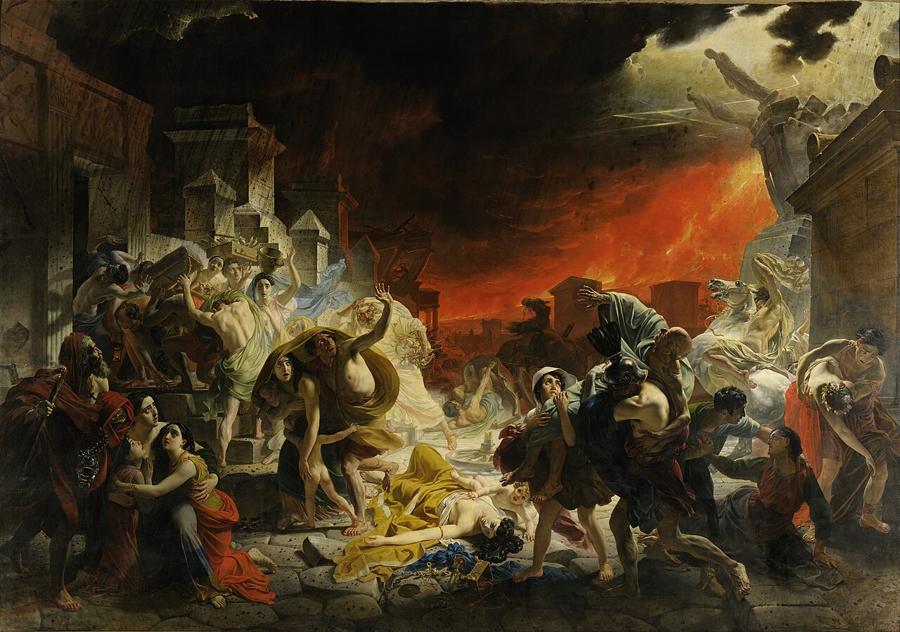
The Ancient Destruction of Pompeii
by Celestia McPark, age 8
About 2,000 years ago, the city of Pompeii, located in what is now southern Italy's Campania region, was destroyed by a volcanic eruption on August 24th. It has been centuries since they found Pompeii in 1748.
The Mount Vesuvius volcano eruption killed an estimated 1,600 to 2,000 residents, but only 10,000 to 26,000 people survived. Hard ash, toxic gas, and stones, called surges, came down from the volcano, burning everything in its way. The surges also entered people’s lungs, causing them to suffocate. Some people stayed in their houses to take cover, but their roofs collapsed, and piles of ash accumulated up to nine feet high in some areas. Some tried to run away, but they got outrun by the surges.
Mount Vesuvius was 4,900 to 6,600 feet tall and 1,476 to 2,000 feet wide. The toxic gas from Mount Vesuvius covered an area of 21 miles high and 33 to 35 kilometers wide. The surges covered people's bodies.
Scientists are still studying Mount Vesuvius, and it continues to erupt today. People can still visit this place and see the bodies and buildings covered in the surges. This site serves as a reminder of an important part of history and helps historians learn more about ancient Roman culture.
[Sources: National Geographic Kids; Ancient Engineering Technologies]











Loading Comments...