Sacagawea Helped Shape American History Through Exploration and Survival
by Ian Kosharek, age 13
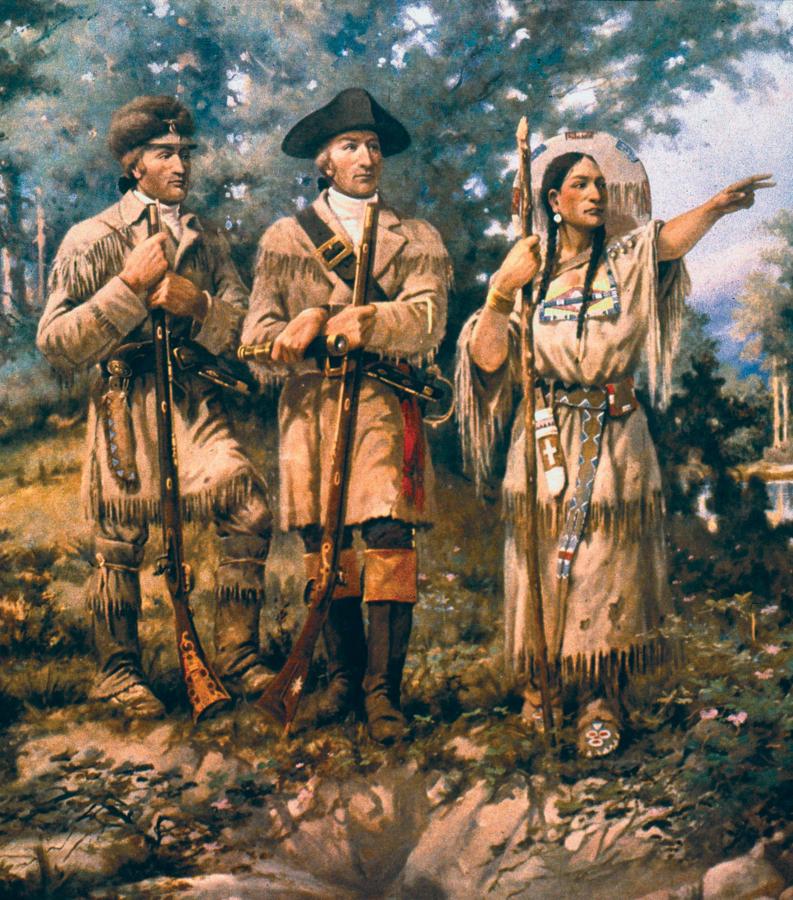
Sacagawea, meaning "boat launcher," is known for traveling thousands of miles with Lewis and Clark on their expedition. She was born into the Shoshone tribe in 1790 in what is now Idaho. As a child, she was abducted by the Hidatsa tribe and then sold into slavery at a young age to the Mandan Sioux.
Sacagawea ended up with Canadian trapper Toussaint Charbonneau. When Sacagawea was 15, the two got married and had a son named Jean Baptiste. Later on, Charbonneau was hired as an interpreter and guide for the Lewis and Clark expedition.
In 1803, the Louisiana Purchase was made by President Thomas Jefferson, which brought Louisiana, Arkansas, Missouri, Iowa, Oklahoma, Kansas, Nebraska, North Dakota, and South Dakota into the U.S. This purchase nearly doubled the size of the country. The U.S. Government needed to know the boundaries of this land, so they hired Lewis, who then hired Clark. These two men then hired Charbonneau as he offered to help.
In 1805, Charbonneau brought his wife, Sacagawea, to help interpret near her homeland, where she was reunited with her Shoshone tribe. Soon after, she met the chief of the Shoshone people, who turned out to be her brother, Cameahwait. The reunion laid the groundwork for the Lewis and Clark expedition, since they needed help from the Natives to get over the Bitterroot Mountains of Idaho and Montana. Before the expedition, Sacagawea’s brother, Cameahwait, sold steeds to the travelers and sent guides to help them over the mountains. Even with the Shoshone tribe’s help, the expedition was still challenging. Lewis and his team still suffered from rough terrains and restless nights. Without the tribe's help, the Lewis and Clark expedition would have gone through much worse.
In addition to Sacagwea interpreting, she also helped find food and was a sign of peace and trustworthiness. Despite all of Sacagawea's contributions, only Charbonneau got paid for his work on the expedition.
After the expedition, Clark offered to educate Sacagawea and Charbonneau's young child, Jean Baptiste. They accepted this offer and moved to St. Louis. Later on, the couple had a daughter named Lizette and moved back to the Mandan village around 1811.
Stories from the Shoshone say Sacagawea went back to the Shoshone tribe and settled at the Wild River Reservation, where she reportedly passed on April 9, 1884, and was buried alongside other Shoshone members.
Today, Sacagawea is remembered for her role in U.S. exploration and as an important figure in American history. She can be seen on the one-dollar coin. The front of the coin shows a portrait of her and her baby, Jean Baptiste.
[Source: Federal Highway Administration; National Women’s History Alliance]











Loading Comments...