Understanding the First Amendment: The Foundation of American Rights
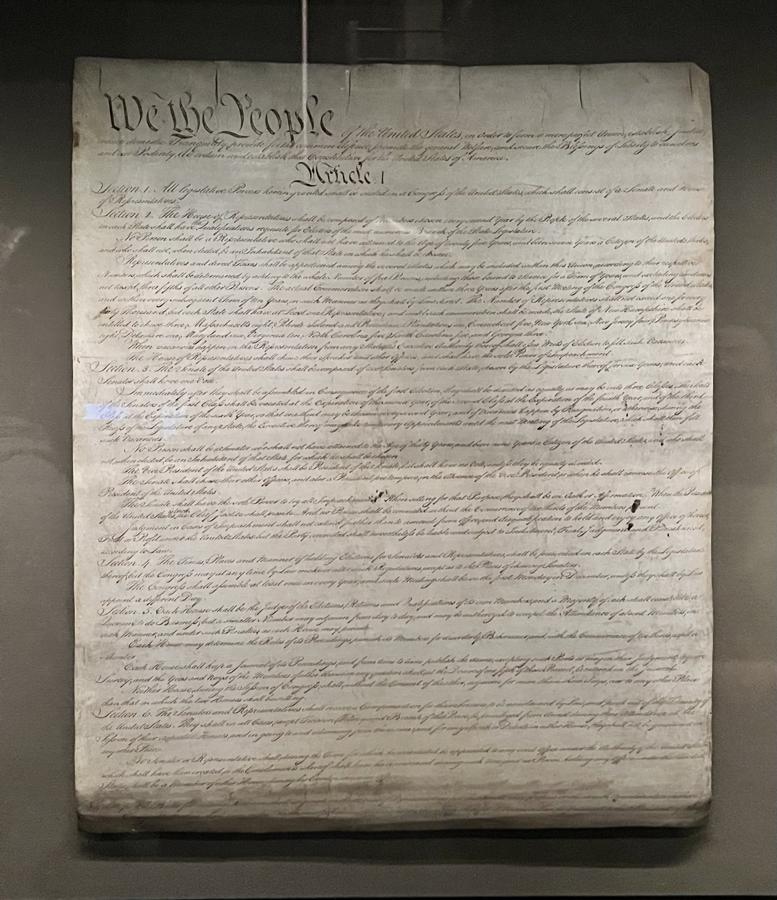
by Will DeFour, age 14
The First Amendment is one of the barriers between American society as it is today, and a more authoritarian government similar to those that lock up journalists, set curfews, and prevent citizens from speaking out against their leaders.
Freedom of speech tops the Bill of Rights, which is a document containing ten amendments with similar freedoms, such as the right to a speedy trial, no cruel or unusual punishment, and the right to keep and bear arms. They were amendments to the Constitution of the United States, a document detailing how the government can write laws, declare wars, and the checks and balances within it.
The First Amendment protects many forms of expression. These five freedoms are freedom of speech, the right to practice–or not to practice–any religion, the ability of the people to write petitions to the government to incite change, freedom of the press, and the right to assemble in a nonviolent manner.
When asked about the First Amendment, people often first think of the freedom of speech. Freedom of speech protects many forms of self-expression beyond just verbal communication. In the 1943 court case West Virginia Board of Education v. Barnette, the court ruled that no student could be forced to salute the American flag. In 1989, symbolic speech, such as flag burning, was legitimized in Texas v. Johnson. However, there are boundaries to the freedom of speech, it does not include the right to shout danger words, such as “fire,” in a crowded building, advocating for illegal drug use, or inciting violence or other lawless activities.
The First Amendment is a freedom for the American people to express themselves and it is crucial to maintaining a democratic government. It protects many rights beyond speaking and its extent and limits are a part of what shapes American society today.
[Source: Library of Congress]











Loading Comments...