The Fight for Racial Equality in the 20th Century Started with the Niagara Movement
by Ruben Becerril, age 13
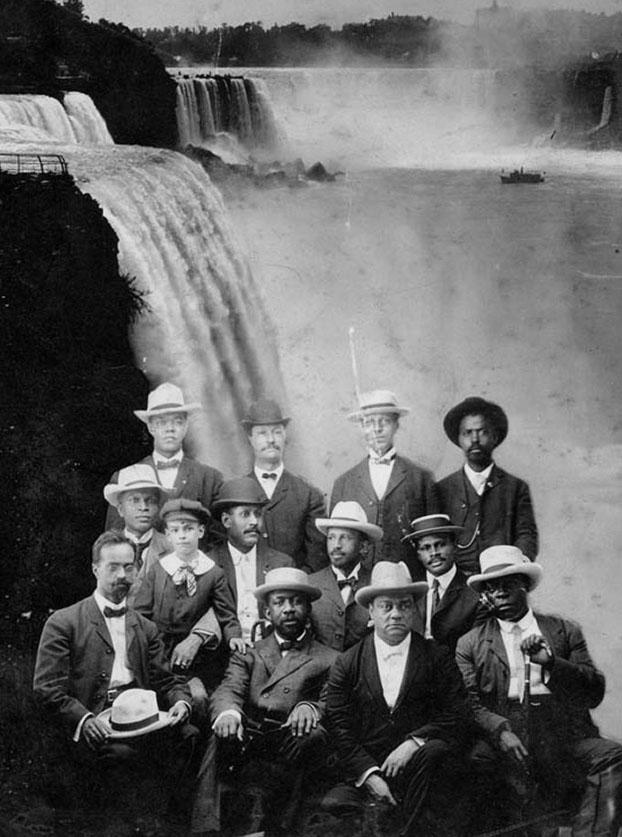
In 1905, 28 prominent Black intellectuals led by W.E.B. Du Bois met in Fort Erie, Ontario near Niagara Falls, to form an assertive approach to the civil rights movement.
The Niagara Movement was a radical civil rights organization that demanded immediate and full political civil rights for African Americans. One of the primary reasons for the formation of this organization was opposing Booker T. Washington, a prominent Black civil rights advocate. He argued that African Americans should advance themselves through learning skills such as farming and carpentry. In 1895, Washington made a speech known as the Atlanta Compromise, in which he argued that African Americans should temporarily refrain from demanding full political and social equality. He stated, “Living separately, yet working together, both races will determine the future of our beloved South.”
During this time, the promises of the 14th and 15th Amendments had fallen short. Reconstruction ended, and the promise of 40 acres and a mule was unfulfilled. The Supreme Court also effectively made Jim Crow laws protected by the Constitution in Plessy v. Ferguson.
At their first meeting for the Niagara Movement, the founding 29 members adopted a constitution, by-laws, and drafted a “Declaration of Principles” that dedicated the group to fight for political equality for African Americans. The “Declaration of Principles” advocated for free compulsory common school education, high school, and college education for all, while having economic opportunities without racial barriers.
By 1906, the Niagara Movement had grown to around 170 members across 34 states. That same year, the group held its first meeting in Harpers Ferry, Virginia, the site of John Brown’s anti-slavery raid in 1859.
Though the Niagara Movement achieved state-level success, like lobbying against segregated railroad cars in Massachusetts, the group failed to gain national momentum. The group suffered from limited financial resources, opposition from Booker T. Washington and his supporters, and internal disagreement between Du Bois and William Monroe Trotter regarding whether to allow women and white individuals to join. Trotter opposed these ideas so he left in 1908 and founded his own civil rights organization.
Despite a meeting in 1907 attracting around 800 members, support for the group began to dwindle. In the wake of a major race riot in Springfield, Illinois, Du Bois and many other prominent activists, including Mary White Ovington, joined together to form a new civil rights organization with both black and white members. The result was the formation of the National Association for the Advancement of Colored People (NAACP), founded in 1909 in New York City. The NAACP remains widely considered the oldest and largest civil rights organization in the U.S. today. Though the Niagara Movement formally disbanded in 1911, the majority of the group’s members continued the fight with the NAACP.
[Sources: History.com; The University of Oklahoma; The Pan African Historical Museum]











Loading Comments...