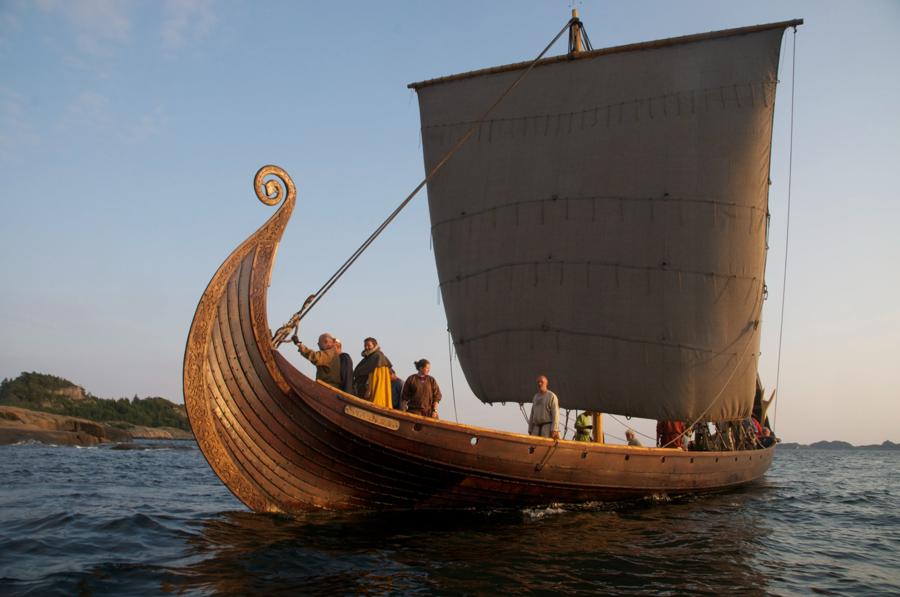
The Vikings Used Ships to Prepare for the Afterlife
by Ermiyas Abiy, age 10
Vikings not only used their boats for living and traveling, but also for preparing the dead. Much like Egyptians buried mummies in pyramids, Vikings, at times, entombed the dead in their ships.
The Vikings were people who explored the world using boats. A ship called the Oseberg ship was discovered in Norway in 1904. Experts reassembled the ship, finishing their work by 1926. It was in very good shape, even though it was used and made about 1,100 years before it was found. It was entirely made of oak wood, while the paddles were made of pine wood. The boat was unique due to the carvings on its stern and bow.
The Oseberg ship had a length of 70 feet and a width of 17 feet. The area of the ship was a surprising 1,190 square feet for only two people. It had very large oars. Viking ships could go very fast with sails due to their shape. The ships had great durability.
Experts believe it was used for a burial act around 834 AD. The Vikings had similar beliefs to the Egyptians; both sent the deceased off with goods for the afterlife. With the ship’s discovery, there were two female skulls found with many goods that would have been needed for such a trip. It is believed that this was from a burial act.
This piece of Viking history is important because it helps us understand Viking ships and how they were used. After the Oseberg ship was found and reassembled in 1926, it was moved to the Viking Ship Museum so the public could learn more about it.
Though the Vikings and their ships were much different from modern ships and civilizations, they still shared similarities with others in their time, such as the Egyptians.
The Vikings were a unique group of people with a fascinating cultural history. Their ships helped them travel the world and remember their loved ones.
[Sources: The Viking Herald; World Atlas]











Loading Comments...