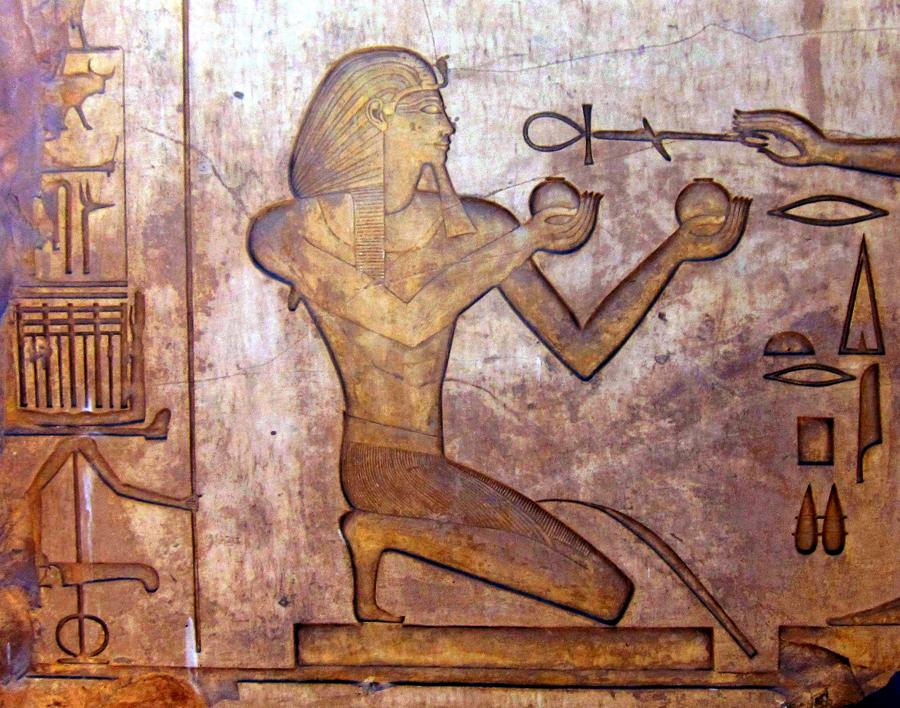
Lost Egyptian Tomb Discovered!
by Haliah Berkowitz, age 14
A recent archaeological discovery has garnered attention from Egyptologists worldwide: the original tomb of King Thutmose II has been discovered.
Most people are familiar with some of the great pharaohs who ruled in Ancient Egypt's Eighteenth Dynasty, as well as those who were buried in the Valley of the Kings, including Queen Hatshepsut, Cleopatra, and King Tut. However, not many know that fourteen different great pharaohs and kings ruled, such as the great Pharaoh Thutmose II. Along with people not knowing who he was or the great life he lived, they also have very little understanding of his reign, death, and burial.
Pharaoh Thutmose II was a part of Ancient Egypt’s Eighteenth Dynasty. This Dynasty reigned for over two centuries, from 1550 BC to 1292 BC. King Thutmose's rule lasted from 1493 BC until around 1479 BC. He was the half-brother and husband of the Egyptian Queen Hatshepsut. The two were married when they were around fourteen or fifteen years old, and their marriage lasted for ten to fifteen years. However, Thutmose eventually died; after his death and burial, Hatshepsut named herself Queen and ruled by herself for over twenty years.
While Thutmose ruled, one of the greatest things about him was that he is speculated to have been the same anonymous pharaoh in the Bible credited with chasing the Israelites across the Red Sea. Although most educators argue over who the pharaoh is—Thutmose II, Thutmose III (his son), or Ramses II— it is generally agreed to be Pharaoh Thutmose II. In addition to this, he led one of the fiercest armies and military forces. This army is what bonded and captured the success of his father’s reign.
Despite all of these facts, the most interesting thing by far is his death, burial, and tomb. Thutmose II is hypothesized to have died from heart failure, and this is assumed from medical scans taken from his mummy. He has been buried twice; no one knew where his first tomb was, but the second tomb was found in a site called Deir el-Bahari Cachette. He was first buried, then moved and reburied in his second tomb 500 years after his death because of floods and tomb raiders in the area. His second tomb and mummy were discovered in the 19th century. Thutmose’s tomb is the last tomb to be found of the pharaoh of the Eighteenth Dynasty. Thutmose’s mummy is now on display, along with some of the other ancient Egyptian royals, at the National Museum of Egyptian Civilization.
An Egyptian and British archaeological team accidentally stumbled upon the entrance to Thutmose II’s tomb in the Mount of Thebes area, which is just west of the Valley of the Kings, in October of 2022. The tomb was originally called No. C4 and was thought to belong to a pharaoh’s wife. However, Piers Litherland, the head of the British Team on site and archaeologist for the University of Cambridge, and Mohamed Abdel Badie, head of the Egyptian team on site and the head of the Egyptian Antiquities Sector at the Supreme Council of Antiquities, found evidence proving it was the original tomb of Thutmose II. They saw inscriptions and imagery from the famous funeral text, the Amduat, which is a guide for the soul’s journey to the afterlife. Along with the Amduat texts, the archaeologists found duck-shaped jars, made of alabaster with special inscriptions, that may have held perfumes and ointments. After three years of excavation, Egypt's Ministry of Tourism and Antiquities announced in mid-February of 2025 that the last missing tomb of the pharaoh of Ancient Egypt’s Eighteenth Dynasty has finally been found.
Thutmose II may not be one of the better-known pharaohs, but he still deserves his life and story to be told. He was an amazing leader on and off the battlefield and he was the half-brother and husband to Queen Hatshepsut. Despite his achievements and fascinating burials, he is still one of the least-known pharaohs. Perhaps the announcement that his original tomb was found will garner him the attention and recognition he deserves.
[Source: Associated Press; Britannica; CBS News; National Geographic]











Loading Comments...