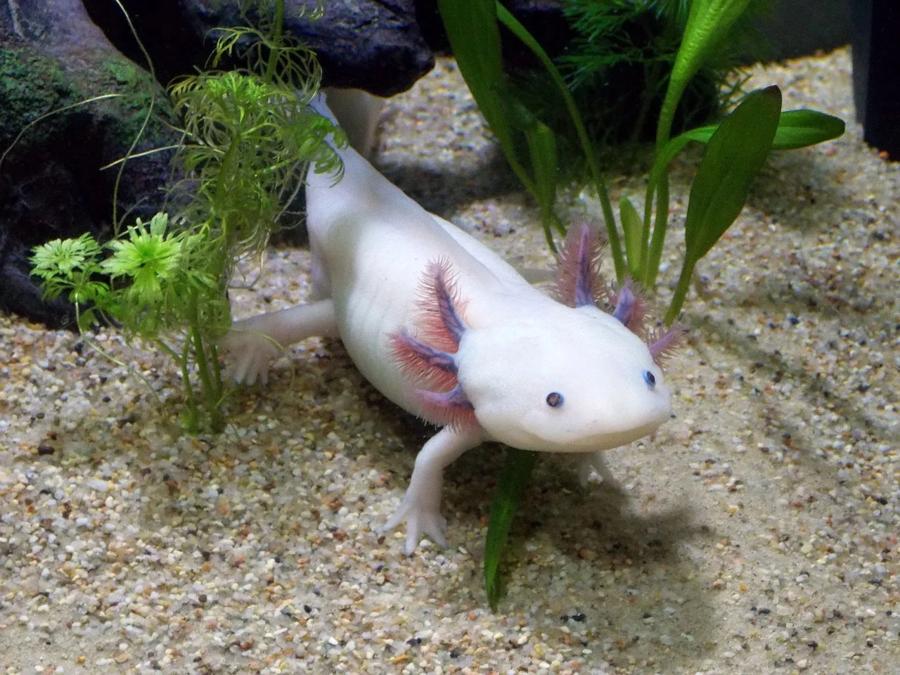
The Rare "Walking Fish" of Mexico’s Lakes
by Edna Torres, age 7
The axolotl is a type of salamander native to Mexico. They are commonly found in the freshwater lakes of Xochimilco and Chalco. This fascinating creature is not only rare and protected, but it also has biological abilities that continue to amaze scientists and nature lovers.
The scientific name for the axolotl is Ambystoma mexicanum. Despite these creatures being amphibians they don't develop in the same way as other amphibians such as frogs. Typically, amphibians start as eggs and hatch into a larval stage, such as tadpoles, and then grow into creatures such as frogs. However, due to their genetics, axolotls physically stay in their larval stage through adulthood.
Axolotls are usually brown, black-grey, or light pink. They can grow between six inches and 18 inches long and weigh approximately eight to 11 ounces. These creatures have a long tail, a flat head, and four lizard-like limbs. Axolotls spend most of their lives underwater water and have gills however they are not fish. Due to their aquatic habitats and lizard-like features, axolotls are often referred to as "walking fish".
The axolotl's diet consists of meat, small fish, worms, and insects. It usually hunts at night using a suction technique to capture and digest food. Axolotls have amazing healing abilities. If they were to lose a limb they could simply regrow it including its bone, muscle, and flesh without scarting.
When they reproduce, females lay their eggs underwater. Axolotls can lay eggs individually on leaves and plants in lakes. However, over the years the population of axolotls has decreased significantly. Habitat loss, water pollution, and invasive species make it hard for axolotls to survive to adulthood in the wild.
The axolotl is an incredible amphibian that is rare to find and is considered critically endangered. These fascinating creatures have unique physical traits and remarkable biology. It is important to support conservation efforts to ensure their survival.
[Sources: PBS; National Geographic]











Loading Comments...